
Choosing the right balancing setup can make or break a mobile tire service workflow. The best options need to be portable, accurate, and fast enough to keep jobs moving without sacrificing results.
Below, we’ve focused on machines and combos that fit service trucks, small garages, and on-the-go repair work, with an emphasis on real-world usability over unnecessary features.
Best 10 Wheel Balancing Machines for Mobile Tire Service Picks for 2026
Portable Bubble Balancer
Portable Bubble Wheel Balancer

- Lightweight 11.26 lb build for easy transport
- Bull’s eye level supports accurate static balancing
- Fits hubs from 1-1/2" to 4" diameter
Best For: Mobile tire service and light-duty balancing
Precision Shop Balancer

- Longer shaft fits wider wheels and custom rims
- Multiple rim-specific modes improve balancing precision
- Pure copper motor supports fast heat dissipation
Best For: Dedicated service work with wider wheels and custom rims
Heavy-Duty Portable Balancer

- Compact and lightweight for easy portability
- Aluminum alloy base with rust-resistant enamel
- Supports hub diameters from 1-1/2" to 4"
Best For: Mobile shops and beginner-friendly car or light truck balancing
Combo Service Station
KATOOL 24" Tire Changer and Balancer Combo

- Includes both a tire changer and wheel balancer
- Balancer handles 10-24" rims and 143 lb wheels
- 6-9 second cycle time supports efficient work
Best For: Shops wanting an all-in-one tire service setup
Portable Compact Pick
I40 PRO USB-C Mini Wheel Balancer
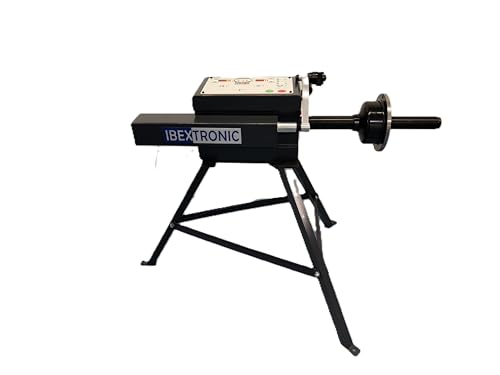
- USB-C powered at DC 5V/1A
- 44 lb main unit for easier moving
- Supports ALU2/ALU3 with 2D auto-arm
Best For: Mobile tire service and compact garage use
Full-Service Combo
KATOOL 2.0HP Tire Changer and Balancer Combo

- Includes both tire changer and wheel balancer
- Supports 12"-22" outside and 14"-24" inside clamping
- Built for 120V North America use
Best For: Full-service garages that need an all-in-one tire setup
Compact Shop Choice
KATOOL KT-715S Lightweight Wheel Balancer

- Fits 10"-24" rims and up to 65 kg wheels
- 15-second measurement cycle
- Transport wheels improve mobility
Best For: Compact shops and mobile-friendly service setups
Combo Shop Pick
XK 988-690 Tire Changer & Balancer

- 110V combo with 2.0HP tire changer
- 690 balancer supports dynamic, static, ALU, motorcycle modes
- Includes bead blaster, cones, and quick-release wing nut
Best For: Full-size tire service setups that need mounting and balancing in one package
Balanced Workshop Value

- Spade cover helps prevent rim damage
- Pull-type pedal control on the tire changer
- 12-month full parts warranty included
Best For: Operators wanting a simple, rim-conscious combo with warranty support
Compact Power Pair
XK 580-690 Tire Changer & Balancer

- 110V combo with dual turntable foot pedal control
- 690 balancer offers dynamic, static, ALU, and motorcycle modes
- Includes clamp protectors, steel mount head, and cones
Best For: Teams wanting a compact-ish shop combo with versatile balancing modes
Portable Bubble Balancer – Portable Bubble Wheel Balancer
If you need wheel balancing machines for mobile tire service that are simple to transport and quick to set up, this portable bubble wheel balancer is built around convenience. It uses a built-in bull’s eye level to help you balance tires accurately, and its lightweight base makes it easier to move between jobs than a full-size shop unit.
Best For: Mobile tire techs, DIY users, and light-duty balancing on most automobiles and light trucks.
Pros:
- Lightweight 11.26 lb design is easy to carry and use on the go
- Bubble level helps with quick, accurate static balancing
- Works with hubs from 1-1/2″ to 4″ diameter
- Non-rust enamel finish adds durability for mobile use
Cons:
- Static bubble design is less advanced than powered shop balancers
- Best suited to most automobiles and light trucks rather than heavier applications
This is a practical pick when portability matters more than automation. It focuses on straightforward balancing for common vehicles, making it a sensible option for mobile service setups that need a compact tool.
Precision Shop Balancer – KATOOL KT-B700 Wheel Balancer
KATOOL Wheel Balancer KT-B700 Machines Home Garage Equipment Service Shop Tools Repair
Check Price On AmazonFor buyers comparing wheel balancing machines for mobile tire service with more shop-style capability, the KATOOL KT-B700 is positioned as a higher-capacity balancing solution. Its longer shaft is designed to handle wider wheels and custom rims, while multiple rim-specific balance modes aim to improve balancing precision.
Best For: Service operators who want a more capable wheel balancer for wider wheels, custom rims, and repeat balancing work.
Pros:
- Longer shaft expands compatibility with wider wheels and custom rims
- Multiple rim-specific balance modes support more precise calibration
- Pure copper motor is designed for fast heat dissipation and longer life
- Stable circuit board is built for consistent power delivery and performance
Cons:
- Dimensions suggest a larger, less portable setup than a simple bubble balancer
- Better suited to a dedicated service area than quick roadside use
This model makes sense when accuracy and wheel compatibility matter more than ultra-portability. It looks like a stronger fit for operators who service a wider mix of wheels and want a balancer built for repeated use.
Heavy-Duty Portable Balancer – NYXOVA Bubble Wheel Balancer
This NYXOVA unit is a practical choice if you want wheel balancing machines for mobile tire service that are compact enough to move but still built for regular use. It combines a lightweight form factor with an aluminum alloy base, rust-resistant coating, and a built-in bull’s eye level for straightforward balancing on common vehicles.
Best For: Mobile tire shops, home garages, and beginner-friendly balancing on cars and light trucks.
Pros:
- Compact, lightweight design makes it easy to move between locations
- Aluminum alloy base with rust-resistant enamel adds durability
- Hub diameters from 1-1/2″ to 4″ are supported
- Built-in bull’s eye level helps with accurate tire balancing
Cons:
- Designed for static balancing rather than powered automated operation
- Primarily aimed at most automobiles and light trucks, not heavier vehicles
Overall, this is a sensible portable balancer for users who want durable construction without giving up easy transport. It fits well in beginner setups and mobile service workflows where simplicity is important.
Combo Service Station – KATOOL 24" Tire Changer and Balancer Combo
If your priority is a fuller mobile or shop service setup, this KATOOL combo brings both a tire changer and a wheel balancer into one package. The balancer section covers rim diameters from 10″ to 24″ and supports wheel weights up to 143 lbs, while the tire changer adds clamping range and rim-protecting features for more complete service work.
Best For: Tire repair shops and automotive service departments that want an all-in-one changer and balancer setup.
Pros:
- Combo unit includes both a tire changer and a wheel balancer
- Wheel balancer supports 10-24″ rim diameter and up to 143 lb wheels
- 6-9 second cycle time supports efficient balancing work
- Rim protection features are built into the mounting head and jaws
Cons:
- Much larger footprint than portable balancer-only tools
- Requires a dedicated service setup rather than a quick carry-and-go approach
This is the strongest option here if you want a more complete tire service station instead of a single-purpose balancer. It is designed for higher-volume work where capability and workflow efficiency matter more than portability.
Portable Compact Pick – I40 PRO USB-C Mini Wheel Balancer
If you need wheel balancing machines for mobile tire service, this compact I40 PRO is built around portability and simple hand-spin operation. It runs on DC 5V/1A through USB Type-C, weighs only 44 lb, and is sized for easy use in a garage, repair bay, or service vehicle.
Best For: Mobile tire techs, small shops, and garage users who want a lightweight balancer with basic electronic measurement support.
Pros:
- USB Type-C power input makes it easy to run from a low-voltage source.
- Lightweight 44 lb main unit is easier to move and install.
- Supports ALU2/ALU3 non-standard mode measurement with a 2D auto-arm.
- Advertised balancing accuracy of ±0.04 oz (1g) for precise correction work.
Cons:
- Hand-spin operation means it is not a fully automated workflow.
- Max wheel diameter is limited to 22 inches.
- Best suited to smaller setups rather than high-volume tire shops.
This is a practical pick if portability matters more than speed or automation. For mobile balancing jobs and compact workspaces, its low weight and USB-C power make it notably easy to deploy.
Full-Service Combo – KATOOL 2.0HP Tire Changer and Balancer Combo
For buyers comparing wheel balancing machines for mobile tire service, this KATOOL combo is really a shop-centered package with both a tire changer and a newly upgraded wheel balancer. It is built for 120V North America use, adds a stronger 2.0HP-class changer setup, and includes features aimed at rim protection and more efficient tire work.
Best For: Shops or mobile operators who want a full tire service combo rather than a standalone balancer.
Pros:
- Combines a tire changer machine and wheel balancer in one package.
- Wheel changer supports 12″-22″ outside clamp and 14″-24″ inside clamp ranges.
- Rim-protecting mounting head includes a plastic cover and polished stainless design.
- 120V/1ph setup with a more powerful motor and closed body design.
Cons:
- Much larger and less portable than a standalone balancer.
- Designed more for garages and repair shops than quick mobile carry-in work.
- Requires more space and installation commitment than compact units.
This combo makes sense when you want to handle the full tire service process in one place. It is less about true portability and more about consolidating changer and balancer functions into a single, stronger setup.
Compact Shop Choice – KATOOL KT-715S Lightweight Wheel Balancer
If you’re shopping for wheel balancing machines for mobile tire service and want something lighter to move around, the KT-715S focuses on compactness, transport wheels, and quick cycle time. It handles 10″-24″ rim diameters, supports wheels up to 65 kg, and is designed to fit workshop use without taking over the floor.
Best For: Mobile-friendly shops that need a compact balancer with broad rim coverage and fast turnaround.
Pros:
- Supports 10″-24″ rim diameters and 1.5″-20″ wheel widths.
- Fast 15-second measurement cycle helps reduce bottlenecks.
- Built-in transport wheels improve mobility around the workspace.
- Supports wheels up to 65 kg with push-button calibration.
Cons:
- Described as a manual balancer, so it may not fit every automation preference.
- Still intended for workshop environments rather than ultra-portable field use.
- Special and optional functions may be needed for unusual wheel shapes.
This model is a solid middle ground between full-size shop equipment and lighter-duty balancing tools. Its quick cycle time and transport wheels make it a practical choice when you need flexibility without giving up wheel size coverage.
Combo Shop Pick – XK 988-690 Tire Changer & Balancer
If you need wheel balancing machines for mobile tire service that can also handle a full tire-change workflow, this XK combo is built for heavier-duty use. The 110V setup, 2.0HP motor, and included air bead blaster make it practical for garages that want a single machine pairing for mounting and balancing, while the balancer supports dynamic, static, ALU, and motorcycle modes.
Best For: Mobile tire service operators or shops that want a full-size tire changer and balancer combo with broad wheel and tire coverage.
Pros:
- 690 balancer offers multiple modes: standard dynamic, static, ALU 1-3, and motorcycle.
- Includes 4 centering cones, quick release wing nut, and accessory kit.
- Wheel balancer claims -1g to +1g balancing accuracy with a 4-7 second cycle time.
- Tire changer includes air bead blaster function and 2.0HP motor.
Cons:
- Large, heavy combo at 397 lbs for the machine listing and 840 lbs item weight overall.
- Requires 110V power and operating air pressure of 6-8 bar for the tire machine.
- Full-size dimensions may be less convenient for very tight mobile setups.
This is a strong all-in-one option if you want a machine pair that covers common passenger and motorcycle balancing needs. It looks best suited to users who can dedicate space and power to a more complete service station rather than a compact roadside kit.
Balanced Workshop Value – KATOOL KT-T800/B700 Combo
For buyers comparing wheel balancing machines for mobile tire service, this KATOOL combo focuses on practical operation and rim protection. The KT-T800 tire changer uses a pull-type pedal control system and a spade cover designed to help prevent rim damage, while the KT-B700 balancer includes multiple balancing methods and an all-in-one pressure sensor support design.
Best For: Shops and mobile operators who want a straightforward tire changer and balancer combo with rim-friendly handling and a warranty.
Pros:
- KT-T800 includes a high-quality spade cover to help prevent rim damage.
- Pull-type pedal control system is built for convenient operation.
- KT-B700 offers multiple balancing methods for different rim types.
- Includes a 12-month full parts warranty.
Cons:
- Notes do not list detailed capacity specs for the changer or balancer.
- Less technical detail is provided than some competing combos.
This combo is appealing if you want a simpler, service-oriented setup with emphasis on user control and rim care. It is especially relevant when you value balanced functionality over a long list of specs.
Compact Power Pair – XK 580-690 Tire Changer & Balancer
This XK combo is another strong option for wheel balancing machines for mobile tire service, especially if you want the balancer paired with a tire changer that is a bit easier to position. The 580 changer uses dual turntable foot pedal control, while the 690 balancer supports standard dynamic, static, ALU 1-3, and motorcycle modes with the same -1g to +1g balancing accuracy.
Best For: Tire service shops or mobile teams that want a 110V combo with broad balancing modes and a more compact changer footprint than larger systems.
Pros:
- 580 tire changer uses dual turntable foot pedal control for easier operation.
- 690 balancer includes multiple modes and quick cycle times of 6-9 seconds.
- Balancing accuracy is listed at -1g to +1g.
- Comes with clamp protectors, steel mount head, cones, and quick release wing nut.
Cons:
- Maximum tire diameter is limited to 37 inches on the changer.
- Notes state the motorcycle adapter shown in the picture is not included.
- Still a substantial 800-lb machine, so it is not a lightweight mobile unit.
Overall, this combo suits operators who want dependable balancing modes without moving up to the largest footprint in the category. It is a sensible middle ground when you need serious shop capability but still want some layout flexibility.
How We Picked These Wheel Balancing Machines for Mobile Tire Service
For mobile tire work, we prioritized portability, power requirements, setup speed, and the ability to handle common passenger-car wheels without making loading and transport difficult. We also favored machines that support a practical service workflow, whether that means a compact manual balancer or a tire changer and balancer combo for higher-volume operators.
Accuracy matters, but so does simplicity. In the field, the best Wheel Balancing Machines for Mobile Tire Service are the ones that reduce downtime, are easy to calibrate, and can survive frequent loading, unloading, and travel.
Quick Comparison
If you need the lightest and simplest option, a manual or bubble-style balancer is usually the easiest to carry and deploy. If you want faster throughput and a more complete service setup, a combo machine can be worth the added size and power demands. USB-powered compact units may suit ultra-light mobile work, while 110V shop-style equipment is better for service vehicles with reliable power access.
Key Buying Factors for Wheel Balancing Machines for Mobile Tire Service
Portability and Footprint
Measure not only the machine itself, but also how it fits in a van or trailer alongside jacks, compressors, and tire tools. Smaller is usually better for solo operators.
Power Source
Check whether the unit runs on standard wall power, 110V, or low-voltage USB/DC input. Mobile operators should match the machine to their inverter, generator, or onboard power setup before buying.
Balancing Method
Bubble and manual balancers are simple and dependable for basic jobs, while powered machines can improve speed and consistency for busy routes. Match the method to your average job mix.
Vehicle and Wheel Compatibility
Look at supported wheel diameter, tire size, and any limitations on load capacity or balancing modes. A machine that cannot handle the most common wheels in your area will slow you down.
Durability and Serviceability
Field equipment should be easy to maintain, with accessible parts and a sturdy frame. For mobile tire service, ruggedness often matters more than premium controls.
Who Should Buy Which Wheel Balancing Machines for Mobile Tire Service?
Solo mobile technicians and small startup services usually do best with a compact portable balancer or a manual unit, especially if storage space and power are limited. Shops or mobile fleets that handle more volume may prefer a combo machine for quicker turnaround and broader service capability.
If your work is mostly simple tire balancing on passenger vehicles, keep it lightweight and easy to deploy. If you want one setup that can support larger jobs and more frequent use, choose a powered combo with enough capacity for your typical customers.