
Choosing the right power setup can make camper van travel safer, quieter, and far more comfortable. From compact inverter kits to all-in-one battery hubs, today’s options cover everything from phone charging to serious off-grid living.
This roundup of vehicle auxiliary power systems for camper vans focuses on practical features, real-world flexibility, and the best fit for different build styles and budgets.
Best 10 Vehicle Auxiliary Power Systems for Camper Vans Picks for 2026
Integrated 48V Starter Kit
BLUETTI RVSolar 5000W Basic Kit

- 5000W 5-in-1 power hub
- 51.2V 100Ah LiFePO₄ battery
- 1-hour multi-source charging
Best For: camper van builds needing an integrated 48V power system
Compact Multi-Device Charger
Hapytrip 4-Port 78W USB Outlet

- Four ports with shared 78W output
- Dual USB-C PD plus dual USB-A QC
- Built-in switch for battery control
Best For: camper vans needing a compact hardwired USB charging panel
Centralized 5-in-1 Hub

- Combines inverter, MPPT, DC-DC, alternator charging
- Auto-recognition setup for easier install
- 5000W central power center
Best For: camper van electrical builds needing a central 5000W hub
Battery Box With Outputs
POWO Carlife Smart Battery Box

- Turns a 12V battery into a power center
- USB-C PD, QC3.0, 12V socket, Anderson plug
- Built-in voltmeter for battery monitoring
Best For: camper van setups needing a protected battery box with accessory outlets
Fast Charging Vehicle Aux Power

- Charges 1kWh in about 75 minutes of driving.
- 3-in-1 unit: charger, battery maintainer, jump starter.
- App monitoring and multiple vehicle protections.
Best For: Vanlifers and overlanders needing fast alternator-based charging
High-Watt AC Backup

- 3000W continuous and 6000W peak output.
- LCD display and 14.8 ft wired remote.
- Dual AC outlets and one USB port.
Best For: Camper vans needing household-style AC from a 12V battery
Smart Shore Power Charging

- 55A AC-to-DC converter with adjustable output.
- 4-stage smart charging for battery health.
- Lithium, AGM, gel, and lead-acid compatible.
Best For: Van and RV owners wanting a simple battery converter-charger
High-Power Camp Van Backup
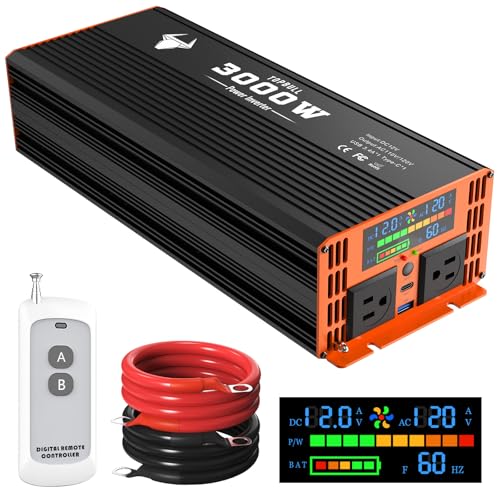
- 3000W continuous, 6000W peak output
- LCD display, remote control, 2 AC outlets
- Extensive protection and cooling features
Best For: Camper van owners needing a high-capacity inverter for off-grid AC power
All-in-One Van Control Hub

- 6-way fuse block with 5 rocker switches
- USB, PD Type-C, voltmeter, and Anderson plugs
- Aluminum body with waterproof, dustproof protection
Best For: Van builders who want a centralized control hub for accessories and charging
Compact Travel Power Pick

- Compact 300W design for light-duty use
- 4 USB ports plus 2 AC outlets
- Quiet cooling fan and easy portability
Best For: Travelers needing a small inverter for charging phones and other low-power devices
Integrated 48V Starter Kit – BLUETTI RVSolar 5000W Basic Kit
If you’re building vehicle auxiliary power systems for camper vans and want a cleaner, more integrated setup, this BLUETTI RVSolar basic kit is aimed at simplifying the whole install. It combines a 5000W power hub with a 51.2V 100Ah LiFePO₄ battery, so you get a centralized platform for running AC and DC loads, charging from multiple sources, and reducing the usual wiring clutter.
Best For: Camper van owners who want an all-in-one 48V power setup with fast charging and straightforward installation.
Pros:
- 5000W 5-in-1 hub integrates inverter, MPPT controller, DC output, DC-DC charger, and EMS.
- 48V system is listed as 30% more efficient than 12V alternatives.
- LiFePO₄ battery is rated for 6,000+ cycles, about 10 years of use.
- Supports AC, solar, alternator, and generator charging, with 1-hour charging claimed.
Cons:
- Basic kit includes the hub, battery, wiring set, and manual, but still requires a larger upfront build.
- Weight and system complexity will be more than a simple portable power station.
- Best suited to users ready for a dedicated 48V installation.
This is a strong pick if you want a van power system that prioritizes integration, efficiency, and long-term durability over portability. The self-heating, weatherproof battery and screw-and-play approach make it appealing for more permanent camper van electrical builds.
Compact Multi-Device Charger – Hapytrip 4-Port 78W USB Outlet
For lighter vehicle auxiliary power systems for camper vans, this 4-port USB panel is a practical add-on for keeping phones, tablets, and accessories charged from a 12V or 24V circuit. Its compact, mounted design is especially useful when dashboard space is tight and you want a simple, hardwired charging point with a dedicated on/off switch.
Best For: Camper van owners who need a compact, hardwired USB charging panel for multiple devices.
Pros:
- Four ports total with up to 78W shared output.
- Includes dual USB-C PD and dual USB-A QC ports for broad device compatibility.
- Built-in switch helps prevent battery drain when not in use.
- Surface-mount or flush-mount installation options fit small spaces.
Cons:
- Power is shared across all four ports, so full output is only available when not all ports are heavily loaded.
- Designed for charging only, not for powering larger 12V appliances.
- Installation still requires cutting/drilling and wiring into the vehicle.
This is a good low-profile upgrade if your camper van needs convenient device charging without adding a large power station. It works best as a supporting accessory inside a larger electrical setup rather than a full power solution.
Centralized 5-in-1 Hub – BLUETTI RV5 5000W Power Hub
If you’re assembling vehicle auxiliary power systems for camper vans and want the core hardware in one unit, the BLUETTI RV5 is designed as the central power hub. It combines inverter, MPPT solar charging, DC-DC conversion, alternator charging, and circuit protection, making it a streamlined foundation for an RV or van electrical build.
Best For: Van builders who want a central 5000W power hub for a larger RV-style electrical system.
Pros:
- 5-in-1 design integrates inverter, MPPT controller, DC-DC converter, alternator charger, and circuit protection.
- Auto-recognition setup is intended to simplify installation.
- Compatible with BLUETTI RVSolar parts and other brands.
- Rated at 5000W for substantial onboard power capacity.
Cons:
- The hub is only one part of a larger system and needs compatible components to complete the build.
- Best for users comfortable with a more involved RV electrical setup.
- At 35 pounds, it is not a lightweight add-on.
This hub makes sense when you want a serious, centralized power backbone rather than a portable solution. For camper vans that need a more permanent and scalable electrical system, it offers a practical way to manage both AC and DC power.
Battery Box With Outputs – POWO Carlife Smart Battery Box
For camper van owners building a flexible auxiliary setup, this smart battery box turns a standard 12V battery into a more usable power center. It adds charging and accessory outputs in one enclosure, which can be handy for solar storage, off-road use, or van systems where you want the battery protected but still easy to access.
Best For: Camper van users who want a protected 12V battery box with built-in accessory outlets.
Pros:
- Converts a standard 12V battery into a multi-function power box.
- Includes USB QC3.0+PD, dual QC3.0 USB, a 12V 15A socket, and a 50A Anderson plug.
- External terminals make it easier to connect cables without opening the box.
- Built-in voltmeter helps monitor battery status during use.
Cons:
- Battery is not included, so you still need to source the battery separately.
- Only fits 24-27 series battery groups, limiting flexibility.
- More of a power distribution box than a full electrical system.
This is a smart option when you want a rugged, compact battery enclosure with useful output ports and monitoring built in. It works well as a support piece in a camper van auxiliary setup, especially if you already have a suitable battery and just need a cleaner power center.
Fast Charging Vehicle Aux Power – 800W Alternator Charger
If you need vehicle auxiliary power systems for camper vans that can recharge a portable power station while you drive, this 800W alternator charger is built for speed. It can replenish 1kWh in about a 75-minute drive and is designed to make use of surplus alternator energy, while also supporting vehicle battery maintenance and jump-start functionality.
Best For: Van lifers and overlanders who want fast on-the-road charging for a portable power station plus added vehicle battery support.
Pros:
- 800W output charges a portable power station much faster than a cigarette lighter charger.
- 3-in-1 design combines charging, battery maintenance, and jump-start capability.
- EcoFlow app support lets you monitor vehicle energy usage and charging status in real time.
- Built-in protections help guard against reverse polarity, overcurrent, short circuits, and voltage abnormalities.
Cons:
- Alternator output must be checked against the vehicle manual for safe operation.
- DELTA Pro connection requires a separate Smart Generator Adapter.
- Best suited to users already invested in a compatible portable power station setup.
This is a strong pick if your priority is faster driving-time charging rather than a basic 12V outlet solution. Its appeal is the combination of speed, monitoring, and built-in protection in one compact system.
High-Watt AC Backup – 3000W Power Inverter
For camper van electrical setups that need household-style AC power, this 3000W power inverter converts 12V DC to 110/120V AC with over 90% efficiency. It is a practical option for vehicle auxiliary power systems for camper vans when you want to run larger everyday electronics, especially if you value remote control access and real-time status monitoring.
Best For: RV and camper owners who want a high-watt inverter for TVs, laptops, fans, and small appliances.
Pros:
- 3000W continuous power with 6000W peak for demanding loads.
- LCD display shows input/output voltage, battery level, and protection status.
- 14.8 ft wired remote makes it easier to manage in hard-to-reach installs.
- Dual AC outlets plus a USB port cover common device needs.
Cons:
- Uses a modified sine wave output, which may not suit every sensitive device.
- Requires a 12V battery system and proper cable installation.
- At 6.9 lbs, it is compact but not ultra-light for portable-only use.
If your camper van needs a flexible AC power source for travel or emergency backup, this inverter offers a strong feature set. The remote control, display, and cooling system make it especially useful for installed vehicle power systems.
Smart Shore Power Charging – PowerMax 55A RV Converter
This PowerMax converter is aimed at camper vans and RVs that need dependable AC-to-DC charging for their battery bank. As part of vehicle auxiliary power systems for camper vans, it offers adjustable output, lithium compatibility, and a built-in multi-stage charger to help keep batteries charged and maintained without complicated rewiring.
Best For: Van and RV owners who want a straightforward converter-charger for battery maintenance and off-grid support.
Pros:
- 55A output with adjustable voltage from 13V to 16.5V.
- 4-stage smart charging helps maintain battery health and avoid overcharging.
- Compatible with lithium, AGM, gel, and lead-acid batteries.
- Easy installation with no rewiring required.
Cons:
- Designed for AC-to-DC conversion, not for powering standard AC appliances directly.
- Best fit is a fixed charging setup rather than a portable-use solution.
- Less focused on high-output runtime than an inverter-based system.
For buyers who want a cleaner battery-charging solution instead of a high-watt inverter, this converter is a practical choice. Its value is in steady charging, battery compatibility, and simple installation for RV and van electrical systems.
High-Power Camp Van Backup – 3000W 12V DC Inverter
If you want vehicle auxiliary power systems for camper vans that can run more than just phones and lights, this 3000W inverter is built for heavier 12V-to-AC use. It converts 12V or 12.8V battery power into 110V/120V AC, and the included remote plus LCD display make it easier to monitor and manage power inside a van build.
Best For: Camper van owners who need a high-capacity inverter for appliances and off-grid AC power.
Pros:
- 3000W continuous output with 6000W peak power for larger loads.
- Includes 2 AC outlets, USB-A, Type-C, LCD display, and remote control.
- Built-in protection features cover low/high voltage, overload, short circuit, overheating, and more.
- Metal housing, dual fans, and 100% pure copper cables support more rugged use.
Cons:
- Modified sine wave output may not suit every sensitive device.
- More than enough for basic charging, so it may be oversized for simple setups.
- Needs proper 12V battery integration and careful installation.
This is the strongest option here if your camper van needs meaningful AC capacity rather than just light-duty charging. It looks best suited to users who want a monitored, more permanent power solution for appliances, travel, or off-grid living.
All-in-One Van Control Hub – 12V/24V Power Control Box
For camper vans that need organized vehicle auxiliary power systems, this control box combines switching, charging, fusing, and voltage monitoring in one enclosure. It is designed for 12V/24V setups and gives you a practical hub for accessories like lights, phone charging, radios, and other everyday cabin devices.
Best For: Van builders who want a centralized, tidy control box for accessories and charging.
Pros:
- Combines a 6-way fuse block, 5 rocker switches, and multiple charging ports.
- Includes USB, PD Type-C, cigarette sockets, voltmeter, and Anderson connectors.
- Aluminum construction is rated for waterproof, dustproof, rust-proof, and flame-retardant use.
- Reserved DIY area makes it easier to mount a DC-DC charger or add equipment later.
Cons:
- Current rating is 20A, so it is not meant for high-draw inverter loads.
- Best suited to accessory distribution rather than full AC conversion.
- May be more box than needed for very simple charging-only setups.
This is a strong fit if you want one central panel to clean up your van electrical layout. It is less about raw power and more about making day-to-day accessory wiring safer, neater, and easier to manage.
Compact Travel Power Pick – 300W Portable Car Inverter
If your camper van setup only needs light vehicle auxiliary power systems for camper vans, this compact 300W inverter covers basic travel charging without taking up much space. It plugs into a 12V vehicle system and provides multiple USB ports plus dual AC outlets, making it handy for everyday devices on the road.
Best For: Travelers who want a small, portable inverter for phones, laptops, and low-power devices.
Pros:
- Very compact and lightweight, so it is easy to store or move between vehicles.
- Offers 4 USB-C/A charging ports plus 2 AC outlets.
- Suitable for common low-power items like smartphones, laptops, cameras, and small electronics.
- Upgraded cooling fan is designed to run more stably and quietly.
Cons:
- Limited to 300W, so it is not for high-power appliances.
- Not intended for heaters, hair dryers, or similar heavy loads.
- Works only with DC 12V vehicle systems.
This is the most practical choice if you mainly want portable charging support rather than a full van power solution. It is a good fit for road trips, camping, and mobile use where space and simplicity matter more than output.
How We Picked the Best Vehicle Auxiliary Power Systems for Camper Vans
We prioritized systems that solve common vanlife needs: dependable DC and AC power, sensible charging options, clear installation paths, and enough capacity to support real travel use. We also looked for products that balance output, expandability, and safety features such as battery management, fused distribution, and smart charging.
For this category, the most useful products are not always the most powerful. The best choice depends on whether you need a compact accessory charging point, a portable inverter, or a fully integrated house-power system.
Quick Comparison: Which Type Fits Your Build?
There are three broad categories to compare. Portable inverters and charger accessories are best for light-duty users who mainly need AC outlets or USB power. Midrange converter and battery-box setups work well for weekend vans or simple auxiliary circuits. Integrated power hubs and alternator chargers are better for frequent travelers who want faster charging, higher efficiency, and cleaner system management.
If you already have a house battery, focus on charging and distribution. If you are building from scratch, look at complete systems that combine inverter, solar input, DC-DC charging, and monitoring in one package.
Key Buying Factors for Vehicle Auxiliary Power Systems for Camper Vans
Power Output and Surge Capacity
Match inverter wattage to the devices you actually use. Small electronics and laptops need far less than coffee makers, induction cooktops, or power tools. Surge capacity matters for appliances with startup loads.
Battery Chemistry and Usable Capacity
LiFePO₄ batteries are popular in Vehicle Auxiliary Power Systems for Camper Vans because they offer long cycle life, strong usable capacity, and better weight efficiency than older lead-acid options.
Charging Methods
Look for solar input, alternator charging, shore power charging, or DC-DC conversion depending on how you travel. Multiple charging paths give you more flexibility when the weather or campsite power changes.
Distribution and Expandability
A good system should make it easy to power 12V loads, USB devices, and AC appliances without clutter. Extra ports, fuse protection, remote monitoring, and modular add-ons can save time during installation and future upgrades.
Safety and Installation Complexity
Check for thermal protection, low-voltage cutoff, proper fusing, and clear wiring documentation. If you are not comfortable with electrical work, simpler plug-and-play or pre-integrated solutions may be the smarter buy.
Who Should Buy Which Vehicle Auxiliary Power Systems for Camper Vans?
Choose a compact inverter or portable charger if you mostly need backup power for devices and occasional AC use. Choose a battery box or converter if you want a practical mid-cost setup for lights, fans, and small appliances. Choose an integrated power hub or alternator charger if you rely on your van full-time, run higher loads, or want the most efficient long-term auxiliary system.
In short, the best Vehicle Auxiliary Power Systems for Camper Vans are the ones that fit your travel style, electrical demand, and installation comfort level—not just the biggest specs on paper.