
When it comes to tire pressure monitoring systems, having the right programming tools is essential for your shop’s efficiency. You need reliable options that guarantee compatibility across various vehicle brands. With so many tools on the market, it can be overwhelming to choose the best ones for your needs. In this guide, we’ll explore the top TPMS programming tools that can enhance your service capabilities and streamline your operations. Let’s uncover what works best for you.
XTOOL TP150 TPMS Programming Tool

The XTOOL TP150 TPMS Programming Tool is an excellent choice for automotive professionals and DIY enthusiasts looking for a reliable solution to manage tire pressure monitoring systems. It supports activation, relearning, and programming of dual frequency TPMS sensors, covering 99% of vehicle makes, including popular brands like Audi and Toyota. With multiple functions like diagnostics and resetting warning lights, it’s user-friendly despite lacking a touch screen. The TP150 quickly identifies issues, reads and clears Diagnostic Trouble Codes, enhancing vehicle safety. Its portable design and lifetime updates guarantee you stay ahead in tire management, making it a must-have in your shop.
Best For: Automotive professionals and DIY enthusiasts seeking a reliable tool for managing tire pressure monitoring systems.
Pros:
- Supports activation, relearning, and programming of dual frequency TPMS sensors for a wide range of vehicle makes.
- User-friendly interface allows for quick diagnostics and clearing of Diagnostic Trouble Codes (DTCs).
- Portable design with lifetime updates ensures optimal performance and future compatibility.
Cons:
- Lacks a touch screen, which may affect ease of use for some users.
- Requires pre-programmed sensors or specific XTOOL sensors for programming.
- Some vehicles may not require relearn tools, limiting the tool’s applicability in certain scenarios.
Autel MaxiTPMS TS508WF TPMS Programming Tool

For automotive shops looking to streamline their tire pressure monitoring system (TPMS) services, the Autel MaxiTPMS TS508WF is an excellent choice. This tool is compatible with most US models and many European and Asian brands, specifically programming Autel MX-Sensors. With WiFi updates, it supports 99% of vehicles globally. You’ll appreciate its advanced programming via OBD2, allowing for wireless activation of multiple sensors and easy diagnostics. The TS508WF also reads sensor data and clears TPMS DTCs, addressing nearly all TPMS issues. Plus, it comes with lifetime updates, a one-year warranty, and 24/7 technical support, ensuring you’re always covered.
Best For: Automotive shops looking to enhance their TPMS services with a versatile, user-friendly tool.
Pros:
- Wide Compatibility: Works with most US, European, and Asian vehicle models.
- Advanced Features: Offers OBD2 programming, wireless sensor activation, and comprehensive diagnostics.
- Lifetime Support: Includes free software updates, a one-year warranty, and 24/7 technical assistance.
Cons:
- Limited Sensor Compatibility: Only programs Autel MX-Sensors (315/433MHz).
- Potential Compatibility Issues: Users may need to contact support for specific vehicle compatibility.
- Learning Curve: Some users may find the advanced features complex initially.
Autel MaxiTPMS TS508WF TPMS Programming Tool

Looking to enhance your shop’s efficiency in tire maintenance? The Autel MaxiTPMS TS508WF is your go-to TPMS programming tool. This upgraded WiFi version lets you program Autel MX-Sensors quickly—just 6-8 seconds each! With the capability to relearn 99% of TPMS sensors and activate all OEM/Universal sensors, it’s a powerhouse in diagnostics. Plus, you’ll enjoy lifetime free updates to keep up with new vehicle models. Weighing just 4.02 pounds and compact in design, it’s easy to handle. Register it before use, and you’ll have access to robust technical support whenever needed.
Best For: Automotive shops and technicians looking for an efficient and reliable tool for TPMS programming and diagnostics.
Pros:
- Quick Programming: Programs Autel MX-Sensors in just 6-8 seconds each, enhancing workflow efficiency.
- Comprehensive Sensor Support: Relearns 99% of TPMS sensors and activates all OEM/Universal sensors for versatile use.
- Lifetime Updates: Offers lifetime free software updates via WiFi or USB to stay current with new vehicle models.
Cons:
- Brand Limitation: Only programs Autel MX-Sensors and not compatible with other sensor brands.
- Registration Required: Must be registered before use, which may be an additional step for users.
- Weight and Size: Weighing 4.02 pounds, it might be slightly bulkier compared to other handheld TPMS tools.
VXDAS 2IN1 TPMS Relearn Tool for GM and Ford

Designed specifically for GM and Ford vehicles, the VXDAS 2IN1 TPMS Relearn Tool stands out as an essential addition for any shop servicing these brands. It’s compatible with popular models like Buick, Cadillac, and F150. With a model switch button, you can easily operate the tool, supporting TPMS systems at 315/433Mhz. Use it after tire rotations or sensor replacements to reset tire pressure lights and save $50-100 on services. Simply activate the sensors within a minute by pressing the power button. Just remember to equip it with a new 9V battery for peak performance.
Best For: The VXDAS 2IN1 TPMS Relearn Tool is best for auto repair shops and DIY enthusiasts servicing GM and Ford vehicles who need an efficient way to reset tire pressure monitoring systems.
Pros:
- Cost-effective: Saves $50-100 on professional tire pressure light reset services.
- User-friendly: Features a model switch button for easy operation and quick sensor activation.
- Wide compatibility: Works with a range of GM and Ford models, including popular ones like Buick and F150.
Cons:
- Limited to specific brands: Only compatible with GM and Ford vehicles, excluding other manufacturers.
- Battery requirement: Requires a new 9V battery for operation, which is not included with the tool.
- Not suitable for heavy trucks: Cannot be used on heavy trucks with more than 4 tires or vehicles with external TPMS systems.
Autel MaxiTPMS TS508WF TPMS Programming Tool

The Autel MaxiTPMS TS508WF TPMS Programming Tool is an excellent choice for automotive shops seeking efficiency and versatility in tire pressure monitoring system management. This Wi-Fi enabled tool allows you to activate and relearn all OE or aftermarket TPMS sensors wirelessly. With its advanced mode, you gain full control for diagnostics and programming Autel MX-Sensors. Plus, you can easily perform quick sensor data retrieval. The TS508WF offers lifetime free software updates and a one-year warranty, ensuring it stays up-to-date and reliable. For any questions, 24/7 support is available, giving you peace of mind with your investment.
Best For: Automotive shops looking for a versatile and efficient TPMS management tool.
Pros:
- Wi-Fi enabled for easy software updates without the need for a computer.
- Lifetime free software updates ensure expanding vehicle coverage and functionality.
- Comprehensive diagnostic capabilities with advanced mode for full control over TPMS sensors.
Cons:
- Limited compatibility as not all functions are available for every vehicle; VIN verification is required.
- Only programs Autel MX-Sensors, which may limit options for users with other sensor brands.
- Copy by OBD functionality not included in the TS408 model, potentially restricting some users.
VXDAS TPMS Relearn Tool for GM Vehicles (2006-2024)
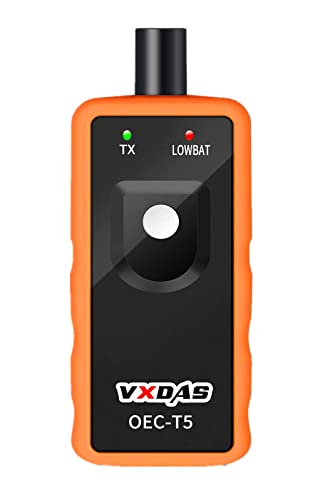
For automotive shops servicing GM vehicles from 2006 to 2024, the VXDAS TPMS Relearn Tool stands out as an important tool. This device is compatible with Chevy, Buick, GMC, Opel, and Cadillac, operating seamlessly with original sensors at 315/433 MHz. It’s vital for tasks like replacing tire pressure sensors or removing alarms. You’ll enjoy quick activation of TPM sensors in just 1-2 minutes, saving time and money. Simply hold the tool against the tire sidewall near the valve stem, press the Learn button, and verify the vehicle’s in TPMS Learn Mode for peak performance and safety.
Best For: Automotive shops servicing GM vehicles from 2006 to 2024 seeking an efficient and cost-effective TPMS solution.
Pros:
- Quick activation of TPM sensors in just 1-2 minutes, saving time.
- Compatible with a wide range of GM vehicles, enhancing versatility.
- Simple operation eliminates the need for dealer trips, reducing costs.
Cons:
- Not suitable for heavy trucks or vehicles with external TPMS systems.
- Requires the vehicle to be in TPMS Learn Mode for proper functionality.
- Limited to GM brands, which may not cater to all automotive shops.
Autel MaxiTPMS TS508WF KIT, TPMS Programming Relearn Tool

Looking for a reliable TPMS programming tool that adapts to your shop’s needs? The Autel MaxiTPMS TS508WF KIT is your solution. This WiFi-enabled tool supports US, EU, and Asian vehicles, making it incredibly versatile. It features three relearn methods—Stationary, Auto, and OBD—and activates 99% of sensors while displaying real-time data like pressure and temperature. With full TPMS diagnostic capabilities, you can read and clear codes effortlessly. Plus, it includes 8 rubber sensors and metal valve stems, enhancing compatibility. Enjoy lifetime updates via WiFi and professional support, ensuring you’re always equipped to tackle any TPMS challenge.
Best For: Automotive shops and technicians looking for a versatile and efficient TPMS programming tool compatible with a wide range of vehicles.
Pros:
- Versatile Compatibility: Works with US, EU, and Asian vehicles, accommodating a diverse customer base.
- Multiple Relearn Methods: Offers three TPMS relearn options, ensuring flexibility and efficiency in different scenarios.
- Lifetime Updates: Provides free updates via WiFi, keeping the tool up-to-date without the hassle of PC downloads.
Cons:
- Limited to TPMS Functions: Primarily focused on TPMS, which may not appeal to shops seeking multi-functional diagnostic tools.
- Initial Learning Curve: New users may require some time to familiarize themselves with all features and functions.
- Cost of Additional Sensors: While it comes with 8 rubber sensors, additional sensors may add to the overall cost for larger operations.
TPMS Relearn Tool for GM Series Vehicles (2006-2024)

Designed specifically for GM vehicles from 2006 to 2024, the TPMS Relearn Tool is an essential asset for any automotive shop focused on efficiency. This tool quickly activates and resets tire pressure monitoring sensors, working with 315 MHz and 433 MHz sensors on models like Chevy, Buick, and Cadillac. With a simple one-button operation, you can reprogram all tires in just 1-2 minutes. Just set the vehicle to tire learning mode, position the tool near the valve stem, and press the button. For peak performance, remember to use a 9V battery and follow the reset order for accuracy.
Best For: Automotive shops and DIY enthusiasts looking for an efficient tool to quickly reset tire pressure monitoring sensors on GM vehicles from 2006 to 2024.
Pros:
- Time-efficient with reprogramming completed in just 1-2 minutes.
- User-friendly design with simple one-button operation.
- Compatible with a wide range of GM vehicles, including Chevy, Buick, and Cadillac.
Cons:
- Requires a 9V battery that is not included with the tool.
- Limited to GM vehicles; not suitable for heavy trucks or other manufacturers.
- Sensing distance may limit usability if not positioned correctly near the valve stem.
Autel MaxiTPMS TS501 PRO TPMS Programming Tool
![Autel MaxiTPMS TS501 PRO TPMS Programming Tool, Same as TS508, 2026 TPMS Relearn Tool Newer of TS501 TS408S, Activate Relearn 99% Sensors, Program Autel MX-Sensors [315/433MHz], TPMS Reset/Diagnosis](https://m.media-amazon.com/images/I/51Y6p39IlsL._SL500_.jpg)
The Autel MaxiTPMS TS501 PRO TPMS Programming Tool is an ideal choice for automotive shops that prioritize efficiency and thorough diagnostics. This upgraded tool enhances TPMS capabilities while maintaining affordability. It reads and clears TPMS DTCs, performs health checks, and offers compatibility with 99% of OEM/Universal sensors. You can program Autel MX-Sensors easily and choose from three relearn procedures to guarantee accuracy after sensor replacements. With lifetime software updates and 24/7 technical support, you’ll have peace of mind knowing help is always available. It’s designed for vehicles up to 2020, making it a versatile addition to your toolkit.
Best For: The Autel MaxiTPMS TS501 PRO TPMS Programming Tool is best for automotive shops seeking an affordable yet efficient solution for TPMS diagnostics and sensor programming.
Pros:
- Offers compatibility with 99% of OEM/Universal TPMS sensors, enhancing versatility.
- Provides lifetime software updates and 24/7 technical support for continuous usability.
- Features multiple relearn procedures to ensure accurate sensor replacement and functionality.
Cons:
- Limited to programming only Autel MX-Sensors, excluding other brand sensors.
- Functions may vary based on vehicle make, model, and year, requiring VIN verification.
- Not compatible with some older vehicle models, as it is designed for vehicles up to 2020.
Autel MaxiTPMS TS508WF TPMS Programming Tool
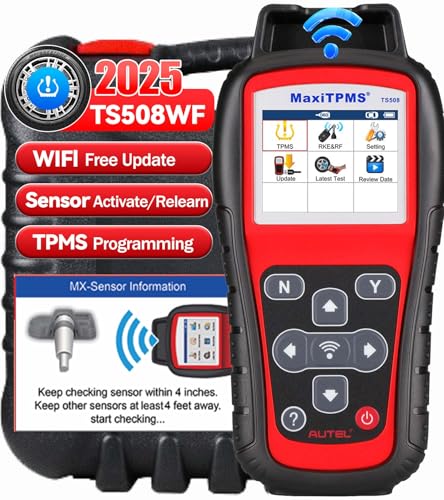
For automotive shops seeking efficiency and versatility in tire pressure monitoring system (TPMS) programming, the Autel MaxiTPMS TS508WF stands out with its advanced wireless capabilities. This tool enhances user experience with two TPMS modes—Quick and Advanced. You can wirelessly program up to 16 Autel MX sensors using OBD or auto-create IDs. The TS508WF resets sensors through automatic, stationary, and OBD relearn methods. It activates all-brand sensors while providing detailed data, aiding in diagnostics. With broad vehicle compatibility and lifetime free updates via Wi-Fi, you can guarantee your shop is equipped for the latest models without hassle.
Best For: Automotive shops looking for an efficient and versatile solution for tire pressure monitoring system (TPMS) programming.
Pros:
- Wide vehicle compatibility with popular brands, ensuring versatility for various clients.
- Wireless programming capabilities allow for quick and efficient sensor management without cumbersome connections.
- Lifetime free updates via Wi-Fi keep the tool current with the latest vehicle models and technologies.
Cons:
- Initial learning curve may be required for users unfamiliar with TPMS programming tools.
- Limited to Autel MX sensors for programming, which may restrict options for some users.
- Price point may be higher compared to basic TPMS tools, which could be a consideration for budget-conscious shops.
Factors to Consider When Choosing TPMS Programming Tools for Shops
When you’re choosing TPMS programming tools, consider how well they match the vehicle models you work with. Think about their programming capabilities, sensor activation methods, and any diagnostic features they offer. Don’t forget to check for update and support options to keep your tools current and effective.
Compatibility With Vehicle Models
Choosing the right TPMS programming tools means considering compatibility with various vehicle models, as this can greatly impact your shop’s service offerings. Make sure the tools you select are compatible with a wide range of makes and models, covering different manufacturing years. It’s essential to support both OEM and aftermarket TPMS sensors to meet diverse customer needs. Additionally, verify that the tool can program sensors operating at both 315MHz and 433MHz frequencies since many vehicles use these. Opt for tools that require minimal extra components or software to simplify the programming process. Finally, look for compatibility checks based on Vehicle Identification Numbers (VIN), which prevent purchasing errors and boost your confidence in the tool’s effectiveness.
Programming Capabilities
Selecting the right TPMS programming tools goes beyond just compatibility; programming capabilities play a significant role in your shop’s efficiency. Make sure the tools you choose support a wide range of sensor frequencies, specifically 315 and 433 MHz, to cover most vehicles. Look for tools offering multiple programming methods, like OBD connection and manual input, so you can adapt to various situations. Tools that program multiple sensors simultaneously can save you valuable time during busy days. It’s also essential to select tools that can activate both OEM and universal TPMS sensors, giving you more flexibility. Finally, consider tools with extensive diagnostic capabilities, including reading and clearing TPMS DTCs, to streamline troubleshooting and maintenance processes effectively.
Sensor Activation Methods
Understanding the various sensor activation methods is essential for optimizing your TPMS programming tools. You’ll find that different tools offer options like wireless activation, allowing quick identification and data retrieval from TPMS sensors without physical connections. Consider methods like “Copy by OBD,” which writes sensor IDs directly from the ECU, or “Auto Create,” which generates IDs when originals can’t be retrieved. Compatibility is key, so look for tools supporting both 315MHz and 433MHz frequency bands for a wide range of OEM and aftermarket sensors. Enhanced capabilities through stationary or automatic relearn methods can simplify the process. Plus, the ability to activate and relearn multiple sensors simultaneously can greatly cut down your service time, making your operations more efficient.
Diagnostic Features
Diagnostic features play an essential role in the efficiency of TPMS programming tools for shops. You should prioritize tools that can read and clear Diagnostic Trouble Codes (DTCs), helping you quickly identify sensor issues. Look for options that provide detailed diagnostics, including real-time data on tire pressure, temperature, and sensor battery status, which enhances your troubleshooting process. Advanced features, such as resetting TPMS warning lights and monitoring both OEM and universal sensors, are also vital. Additionally, tools supporting multiple relearn methods—like Automatic, Stationary, and OBD Relearn—offer you the flexibility needed for various repair scenarios. Finally, a user-friendly interface displaying diagnostic information clearly can greatly boost your servicing efficiency in the shop.
Update and Support Options
When it comes to choosing TPMS programming tools for your shop, prioritizing update and support options can considerably impact your workflow. Look for tools that provide lifetime free software updates to keep pace with new vehicle models and features. Wi-Fi connectivity is a bonus, allowing for one-click updates that enhance convenience without the hassle of computer installations.
Evaluate the technical support offered, especially if 24/7 assistance is available, to resolve issues swiftly. Consider tools that support multiple languages, catering to a diverse clientele. Finally, verify the warranty and return policy are favorable, giving you confidence in the tool’s reliability and your customer satisfaction. These factors can greatly improve your shop’s efficiency and service quality.
Ease of Use
Choosing the right TPMS programming tools for your shop hinges on ease of use, especially since a user-friendly device can save you time and reduce training needs. Look for an intuitive user interface that allows your technicians to operate the tool efficiently without extensive training. Features like one-button operation or simple programming modes can greatly speed up sensor activation and relearning. A lightweight, portable design enhances handling in different shop environments. Additionally, clear user manuals and accessible customer support can provide guidance when issues arise. Finally, opt for tools that require minimal setup and maintenance, so your team can focus on servicing vehicles instead of troubleshooting equipment.
Portability and Durability
Portability and durability are vital factors to contemplate when selecting TPMS programming tools for your shop. You need tools that are lightweight and compact, making them easy to transport between mobile setups and workshops. Look for designs that can withstand the rigors of frequent use in demanding environments; robust materials will guarantee longevity. A user-friendly interface is essential, allowing you to operate the tools efficiently without extensive training. Additionally, prioritize tools with long battery life, as this reduces downtime and the hassle of frequent recharging during busy workdays. Weather-resistant features are also important, as they protect against moisture and dust, assuring reliable performance in diverse operating conditions. Investing in portable and durable tools will pay off in the long run.
Price and Value
While you might be tempted to grab the cheapest TPMS programming tool available, understanding the balance between price and value is essential for your shop’s success. Tools can range from $50 to over $500, reflecting their features and functionality. When evaluating options, consider capabilities like sensor programming, diagnostic functions, and ease of use to match your shop’s needs. Higher-priced tools with lifetime software updates may offer long-term savings by keeping up with new vehicle models. If you frequently service certain brands, specialized tools can justify a higher investment, enhancing efficiency and customer satisfaction. Assess the overall cost of ownership, including savings from fewer trips to tire shops, to determine the true value of your investment in quality TPMS tools.