
Choosing the right solar setup for an RV is mostly about matching battery capacity, panel wattage, and inverter output to how you actually travel. The best systems make it easier to run lights, appliances, and electronics without constant generator use.
This roundup focuses on RV solar kits with lithium batteries that offer a practical mix of value, storage, and off-grid readiness for weekend campers and full-time travelers alike.
Best 10 RV Solar Kits with Lithium Batteries Picks for 2026
All-in-One High-Capacity Pick
800W RV Off-Grid System with 7.168kWh Storage

- 800W solar with 7.168kWh lithium storage
- Includes inverter charger, MPPT controller, Bluetooth, and cables
- Built for powering many common RV appliances
Best For: RV owners wanting a complete high-capacity off-grid package
Compact Battery Upgrade
Slim 200Ah Bluetooth LiFePO4 Battery

- 40.8% smaller Group 31-friendly design
- Bluetooth app monitoring with SOC and voltage checks
- 200A BMS with 20+ safety protections
Best For: RVers needing a compact standalone lithium battery
Large 24V Power Kit
1200W Solar System with Dual 280Ah Batteries

- 1200W panels with 7.168kWh lithium storage
- 60A MPPT controller with Bluetooth monitoring
- 3000W pure sine inverter for common AC appliances
Best For: RVs and trailers needing a larger off-grid power system
Starter-Friendly Compact Kit
1.92kWh RV Solar Kit with 2000W Inverter

- Complete kit with panels, batteries, inverter, MPPT, and mounting gear
- 22.7% efficiency monocrystalline panels with tempered glass
- 2000W pure sine inverter with 4000W surge
Best For: Beginners with smaller RVs and lighter power needs
All-in-One RV Power Starter
200W Solar Kit with Lithium Batteries

- Includes two lithium batteries and a 1000W inverter
- Bluetooth/Wi-Fi monitoring with SOC display
- 20A MPPT controller for improved solar harvesting
Best For: RV owners who want a complete monitored lithium setup
High-Capacity RV Upgrade

- 400W panel array for stronger solar generation
- 12V 100Ah LiFePO4 battery with Bluetooth monitoring
- 2000W inverter charger with built-in UPS support
Best For: RV users wanting higher output and expansion potential
Budget-Friendly RV Starter
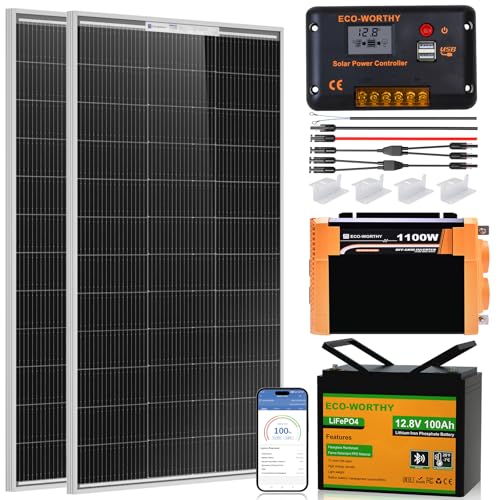
- Simple complete kit with battery, inverter, and controller
- Novice-friendly four-step installation approach
- 800Wh daily power claim with 1.28kWh storage
Best For: First-time buyers seeking an easy complete RV solar setup
High-Capacity All-In-One Kit
400W RV Kit with 280Ah Battery

- 400W array with 12V 280Ah lithium battery
- Includes 40A MPPT controller and 2000W inverter
- Built as a one-stop, novice-friendly system
Best For: RV travelers who want maximum built-in battery storage
Balanced Off-Grid Starter
400W Solar Kit with 100Ah Battery

- 400W panels with 100Ah lithium battery
- 40A MPPT controller and 1100W inverter included
- Bluetooth module and BMS protection built in
Best For: RV owners who want a practical mid-size backup system
Dual-Battery Output Upgrade
400W RV Kit with 2 Lithium Batteries

- Two 100Ah lithium batteries for extra storage
- Upgraded 2000W pure sine wave inverter
- 400W bifacial panel array with MPPT controller
Best For: RV setups that need more battery reserve and stronger AC output
All-in-One High-Capacity Pick – 800W RV Off-Grid System with 7.168kWh Storage
If you want RV solar kits with lithium batteries that bundle most of the core hardware in one box, this ECO-Worthy system is built for straightforward off-grid use. It pairs four 195W bifacial panels with a 3000W inverter charger, a 60A MPPT controller, Bluetooth, and two 12.8V 280Ah lithium batteries for a large all-in-one setup.
Best For: RV owners who want a complete, high-capacity solar kit for off-grid camping and easier installation.
Pros:
- Includes 800W of solar, 7.168kWh of lithium storage, inverter charger, MPPT controller, Bluetooth, and cables.
- Designed to power a wide range of RV appliances, including refrigerators, microwaves, TVs, fans, coffee machines, and water heaters.
- Claims a novice-friendly 4-step installation process with compatibility support and technical help.
- Bifacial 195W panels use high-efficiency solar cells and an all-black look.
Cons:
- Large system size may be more than some smaller RVs need.
- Installation still involves multiple components and battery/panel wiring.
- Best fit is for users comfortable with a full 12V off-grid layout.
This is a strong choice if your priority is a complete, power-rich package rather than piecing together RV solar components one by one. The big battery bank and integrated charger setup make it especially practical for extended travel or heavier electrical loads.
Compact Battery Upgrade – Slim 200Ah Bluetooth LiFePO4 Battery
For RV solar kits with lithium batteries, a compact battery can make a big difference in tight spaces, and this LiTime 12V 200Ah Mini model is designed for that kind of upgrade. It uses a smaller Group 31-friendly footprint, Bluetooth monitoring, and a 200A BMS to deliver a flexible drop-in power source for RV and camping setups.
Best For: RV and marine users who need a smaller, lighter lithium battery with app-based monitoring.
Pros:
- 40.8% smaller than a standard 200Ah LiFePO4 battery and fits Group 31 trays.
- Weighs 44.5 lbs, making installation easier than typical lead-acid batteries.
- Bluetooth 5.0 and the LiTime app let you check SOC and voltage remotely.
- Built with 20+ safety protections and a low-temperature cut-off.
Cons:
- This is a standalone battery, so you still need panels, controller, and inverter for a full solar kit.
- Single-battery capacity may be too limited for larger off-grid power demands.
- Best value depends on whether the compact size matters more than total system capacity.
If you already have the rest of your solar setup, this battery is a smart way to improve space efficiency without giving up LiFePO4 benefits. The Bluetooth monitoring and strong cycle-life claims make it especially attractive for users who want more visibility and less maintenance.
Large 24V Power Kit – 1200W Solar System with Dual 280Ah Batteries
If you’re comparing RV solar kits with lithium batteries for bigger loads, this ECO-WORTHY 24V system is aimed at users who want a larger off-grid package. It combines six 195W panels, two 12.8V 280Ah lithium batteries, a 60A MPPT controller, and a 3000W pure sine inverter for a high-capacity setup with Bluetooth monitoring.
Best For: RVs, trailers, and cabins that need a larger 24V solar-and-storage system with remote monitoring.
Pros:
- Includes 1200W of panels and 7.168kWh of lithium storage for substantial energy reserves.
- 60A MPPT controller claims up to 99% tracking efficiency and Bluetooth monitoring up to 82 feet.
- 3000W pure sine inverter is suited to common AC loads like TVs, refrigerators, microwaves, and coffee makers.
- Uses high-efficiency 195W bifacial panels with a 25% conversion rate claim.
Cons:
- Big, multi-part system may be more than casual weekend RV use requires.
- 24V architecture may not match every RV electrical preference or existing setup.
- More components can mean more planning during installation.
This kit makes sense when you want more solar input and more storage in a single package. The combination of larger panel wattage, dual lithium batteries, and inverter support makes it better suited to serious off-grid use than a lightweight starter setup.
Starter-Friendly Compact Kit – 1.92kWh RV Solar Kit with 2000W Inverter
This 1.92kWh option is a practical entry point if you’re shopping RV solar kits with lithium batteries and want a smaller complete system. It includes four 120W monocrystalline panels, two 12.8V 100Ah LiFePO4 batteries, a 2000W pure sine inverter, and a 40A MPPT controller in a beginner-friendly bundle.
Best For: Beginners and smaller RV setups that need a complete lithium solar kit without going oversized.
Pros:
- Complete starter kit includes panels, batteries, inverter, MPPT controller, wiring, and mounting brackets.
- Monocrystalline panels are rated at 22.7% conversion efficiency with tempered glass construction.
- 2000W inverter offers 4000W surge capacity and multi-protection features.
- LiFePO4 batteries include BMS protection and UN38.3 compliance.
Cons:
- 1.92kWh capacity is smaller than larger off-grid kits.
- Best suited to lighter daily power use rather than heavy appliance loads.
- Not as expandable in the notes as some larger systems with higher battery capacity.
This kit is a sensible choice when you want a more manageable setup and a lower-capacity entry into solar power. It focuses on the essentials, which can be appealing if your RV use is modest and you prefer a simpler starting point.
All-in-One RV Power Starter – 200W Solar Kit with Lithium Batteries
If you want RV solar kits with lithium batteries in a single purchase, this ECO WORTHY package is built as a simple off-grid starter. It combines 200W of solar, two 12V 100Ah lithium batteries, a 20A MPPT controller, Bluetooth/Wi-Fi monitoring, and a 1000W inverter, so it is aimed at buyers who want a compact system they can monitor from a phone.
Best For: RV owners who want an all-in-one lithium solar setup with app-based monitoring and easy off-grid coverage.
Pros:
- Includes 2x 100W panels, 2x 100Ah lithium batteries, inverter, controller, cables, and monitoring module.
- Bluetooth/Wi-Fi support lets you track system performance and status in real time.
- 20A MPPT controller is designed to maximize energy harvest and reduce waste.
- Claims 2.56 kWh battery storage and enough output for most RV appliance use cases.
Cons:
- The 200W solar array is modest for heavier daily power needs.
- 1000W inverter may be limiting for larger high-draw appliances.
- Best suited to buyers who value convenience over system scaling.
This is the most integrated option in the group if you want monitoring and lithium storage without piecing together components separately. It makes the most sense for smaller RV power loads and straightforward setup goals.
High-Capacity RV Upgrade – 400W LiFePO4 Solar Kit
This ExpertPower package is a stronger choice for RV solar kits with lithium batteries when you need more panel output and a higher-capacity inverter setup. It combines four 100W panels, a 12V 100Ah LiFePO4 Bluetooth battery, a 30A MPPT controller, and a 2000W pure sine wave inverter charger for a more capable off-grid system.
Best For: RV, trailer, and camper owners who want more solar input, app-connected battery monitoring, and room to expand.
Pros:
- 400W of monocrystalline solar panel capacity provides more generation than 200W kits.
- LiFePO4 battery includes BMS protection plus Bluetooth app monitoring.
- 30A MPPT controller is designed to increase harvest compared with PWM controllers.
- 2000W pure sine wave inverter charger adds more headroom and built-in UPS functionality.
Cons:
- Only one battery is included, so storage is lower than multi-battery kits.
- More components can mean a larger install footprint than simpler starter systems.
- Expansion is supported, but the base kit is still centered on a single 12V battery.
For buyers who want a more capable all-around RV system, this kit offers the most panel power in the group along with a higher-output inverter. It is a practical pick if you expect to run a broader mix of loads and want a battery that can be monitored from your phone.
Budget-Friendly RV Starter – 200W Complete Lithium Kit
If you are comparing RV solar kits with lithium batteries and want the simplest route into off-grid power, this ECO-WORTHY kit is a straightforward starter. It includes two 100W panels, a 12.8V 100Ah lithium battery, a 1100W inverter, a 30A PWM controller, and all necessary cables, with the brand positioning it as a novice-friendly, four-step install.
Best For: First-time RV buyers who want an easy, budget-oriented complete solar package with lithium storage.
Pros:
- Complete kit includes panels, lithium battery, inverter, controller, and cables.
- Designed for quick installation with a simple four-step setup.
- Claims 800Wh daily power and 1.28kWh of storage for basic RV needs.
- Includes 7/24 customer service and replacement support.
Cons:
- Uses a PWM charge controller instead of MPPT.
- 200W solar input is best for lighter power use.
- Inverter output is 1100W, so it is not aimed at heavy appliances.
This kit is the easiest low-friction entry point of the three, especially if you want a complete package without sorting through individual components. It favors simplicity and value over advanced charging features or higher solar harvest efficiency.
High-Capacity All-In-One Kit – 400W RV Kit with 280Ah Battery
If you want RV solar kits with lithium batteries that feel close to an all-in-one power station, this ECO-WORTHY setup is built around a 400W array, a 12V 280Ah lithium battery, a 40A MPPT controller, and a 2000W inverter. It is designed as a one-stop off-grid solution, so you get the core parts needed for an RV trip without piecing together components separately.
Best For: RV owners who want a higher-capacity, beginner-friendly solar package with fewer separate purchases.
Pros:
- Includes four 100W panels, a 280Ah lithium battery, MPPT controller, inverter, and cables in one package.
- Rated to generate about 1600Wh daily and store 3.5kWh of power.
- Marketed as novice-friendly with quick installation and technical support.
- Large battery capacity gives more storage than smaller 100Ah kits.
Cons:
- Requires parallel panel wiring for 12V setup, so installation still has some steps.
- Bulkier system than lower-capacity kits.
This is the most storage-heavy option in the group, making it a stronger fit for extended off-grid use than light weekend backup. If your priority is a single-package RV solar solution with lithium storage, this kit offers the broadest built-in capacity.
Balanced Off-Grid Starter – 400W Solar Kit with 100Ah Battery
Among RV solar kits with lithium batteries, this ECO-WORTHY bundle is aimed at buyers who want a balanced off-grid starter setup. It combines four 100W panels, a 40A MPPT controller, a 12V 100Ah lithium battery, a Bluetooth module, and a 1100W pure sine wave inverter for a practical 12V system.
Best For: RV users who want a moderate-capacity kit for everyday backup and lighter off-grid loads.
Pros:
- Complete package includes panels, controller, inverter, lithium battery, and Bluetooth module.
- 40A MPPT controller is rated for up to 99% tracking efficiency.
- 100Ah lithium battery is built with BMS protection and over 3000 deep cycles.
- Pure sine wave inverter is described as 95% efficient with low no-load loss.
Cons:
- 1100W inverter is less powerful than the 2000W options in the lineup.
- Battery capacity is smaller than the 280Ah kit.
This kit makes sense if you want a more modest, efficient setup instead of the biggest battery bank. It keeps the same 400W panel count as the larger kits while staying simpler and lighter on storage capacity.
Dual-Battery Output Upgrade – 400W RV Kit with 2 Lithium Batteries
If you are comparing RV solar kits with lithium batteries and want more storage plus a stronger inverter, this ECO-WORTHY package stands out. It pairs four 100W bifacial panels with two 12V 100Ah lithium batteries, a 40A MPPT controller, an upgraded 2000W pure sine wave inverter, and a Bluetooth module for a more capable off-grid setup.
Best For: RV owners who want a higher-output 12V system with extra battery capacity for larger AC loads.
Pros:
- Includes two 100Ah lithium batteries for more storage than single-battery kits.
- Upgraded 2000W inverter supports heavier 110V appliance use under the rated load.
- 40A MPPT controller and inverter are both described as high-efficiency components.
- Bifacial panels are part of the package and the kit includes Bluetooth monitoring.
Cons:
- More battery hardware means a larger, more involved installation.
- Daily output is still listed at 1.6KWH under ideal sunlight conditions.
This is the most power-forward option of the three when you want to support more demanding RV usage. The dual-battery layout and 2000W inverter make it a strong pick if storage and AC output matter more than simplicity.
How We Picked These RV Solar Kits with Lithium Batteries
We focused on complete kits that combine solar panels, lithium storage, and core charging hardware in a single package. Priority went to systems with sensible wattage ranges, LiFePO4 batteries, MPPT or hybrid charging support, and enough inverter capacity for common RV loads.
We also considered ease of setup, scalability, and whether the kit better suits basic charging or more demanding off-grid use.
Quick Comparison
Smaller 200W kits are best for light-duty camping, battery maintenance, and minimal electrical use. Midrange 400W to 1200W systems are better for regular boondocking, while larger 800W-plus and multi-battery setups are geared toward longer off-grid stays and higher appliance demand.
Key Buying Factors for RV Solar Kits with Lithium Batteries
Battery Capacity
Look at amp-hours and total watt-hours, not just the battery count. A 100Ah lithium battery is often enough for light use, but 200Ah or more makes a bigger difference if you run a fridge, fans, or an inverter overnight.
Solar Input Size
Match panel wattage to your daily usage and charging goals. More panels help recover battery power faster, especially if you camp in partial shade or use more electricity during the day.
Inverter and Controller Compatibility
Check that the inverter can handle your startup loads, and make sure the charge controller is sized properly for the solar array. MPPT controllers are usually the better choice for efficiency.
System Voltage
12V kits are common and easy to integrate with most RVs. 24V systems can be more efficient in larger builds, but may require more planning and compatible components.
Who Should Buy Which RV Solar Kits with Lithium Batteries?
If you want a simple starter setup for occasional trips, a smaller 200W kit is the most budget-friendly choice. If you boondock regularly and want more freedom from hookups, a 400W to 800W kit with at least 100Ah to 200Ah of lithium storage is a smarter fit.
For larger RVs, long-term off-grid living, or heavier appliance use, choose one of the higher-capacity RV Solar Kits with Lithium Batteries that includes stronger inverter output and expanded battery storage. That gives you more usable power, faster recovery, and better long-term comfort.