
Choosing the right home charger is about more than speed. If you want reliable daily charging without overloading your electrical system, load management matters just as much as amperage.
These Level 2 EV chargers with load management are built for smarter home use, whether you drive a Tesla or another EV, need Wi-Fi controls, or want future-ready features like solar support and OCPP compatibility.
Best 10 Level 2 EV Chargers with Load Management Picks for 2026
Meter-Included Load Balancer
IYILO 48A Level 2 EV Charger with Energy Meter

- Energy meter and CT clamps support dynamic load balancing
- 48A hardwired output with 1A current adjustment
- App features scheduling, RFID, and energy tracking
Best For: Homes that want load balancing built into the charger package
Energy-Monitoring Smart Pick
Emporia Pro 48A EV Charger with PowerSmart
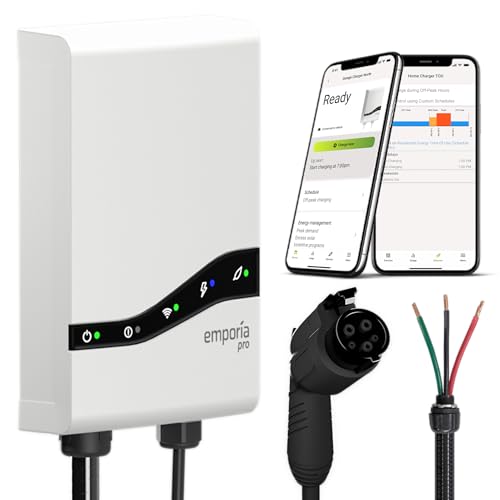
- PowerSmart balances load on your existing panel
- Includes Emporia Vue for home energy insights
- Hardwire or NEMA 14-50 installation options
Best For: Buyers who want smarter charging and whole-home energy visibility
Tesla Load-Sharing Choice
IYILO 48A NACS Charger with Power Sharing

- Native NACS connector for Tesla-style charging
- Power sharing supports two chargers on one circuit
- Load balancing works with optional energy meter bundle
Best For: Tesla drivers who want circuit sharing and smart load control
Black Energy-Savvy Value
Emporia Pro 48A EV Charger in Black

- PowerSmart balances load on your existing panel
- Includes Vue home energy monitor
- Black version with hardwire or plug-in options
Best For: Buyers wanting Emporia’s load management in a black finish
Premium Hardwired Smart Charger

- Up to 48A hardwired charging on a dedicated circuit
- WiFi app controls current, scheduling, and cost tracking
- IP66/NEMA 4 weatherproof build with 25 ft cable
Best For: Non-Tesla EV owners who want a smart hardwired home charger
Load-Balancing Solar Option

- Pairs with Power Monitor for dynamic load balancing
- Three solar charging modes help cut charging costs
- Hardwired 50A design with app and OTA updates
Best For: Homes that want load balancing and solar-friendly smart charging
Flexible Plug-In or Hardwired Pick

- Plug-in NEMA 14-50 or hardwired installation options
- Up to 48A hardwired, 40A in plug-in mode
- WiFi app tracks energy and schedules charging
Best For: Households that want flexible installation and smart charging data
Reliable Smart Home Charger
ChargePoint HomeFlex Level 2 EV Charger

- Up to 45 mi/hr depending on vehicle
- ChargePoint app for reminders and charging info
- UL-certified, indoor/outdoor hardwired design
Best For: drivers who want a trusted hardwired home charger with app controls
Solar-Ready Load Manager

- Active load management with Power Monitor
- Three solar charging modes
- Wi-Fi, Bluetooth, and OCPP support
Best For: homeowners who want plug-in convenience plus dynamic load balancing
Power-Sharing Wall Charger
Level 2 EV Charger with Load Management

- Power sharing on one circuit breaker
- Load balancing available with Energy Meter bundle
- 48A output, app scheduling, and RFID
Best For: households wanting a hardwired charger with power-sharing and app control
Meter-Included Load Balancer – IYILO 48A Level 2 EV Charger with Energy Meter
If you want a Level 2 EV charger with load management that can help avoid a panel upgrade, this IYILO model is built around that use case. It combines a 48A/11.5kW hardwired charger with an included energy meter and CT clamps for real-time dynamic load balancing, so charging can automatically adapt to your home’s available power.
Best For: Homeowners who want a hardwired J1772 charger with built-in load balancing and energy monitoring.
Pros:
- Includes an energy meter and CT clamps for dynamic load balancing out of the box
- Adjustable current from 6A to 48A in 1A steps
- Dual temp sensors and connector overheat protection add a safety layer
- Wi-Fi app supports scheduling, TOU rates, RFID, and energy tracking
Cons:
- Hardwired installation requires a 60A breaker and licensed electrician
- Supports 2.4GHz Wi-Fi only, not 5GHz
- Tesla drivers need a J1772 adapter, which is not included
Overall, this is a strong fit if load management is the main reason you’re shopping for a charger. The bundled meter and CT clamps make it especially appealing for homes where electrical capacity is tight and smarter power allocation matters.
Energy-Monitoring Smart Pick – Emporia Pro 48A EV Charger with PowerSmart
For shoppers comparing Level 2 EV chargers with load management, the Emporia Pro stands out because PowerSmart is designed to work with your existing electrical panel and automatically balance load. It also includes an Emporia Vue monitor, giving you a broader look at home energy use while you charge.
Best For: Drivers who want load balancing plus whole-home energy monitoring from a US-based brand.
Pros:
- PowerSmart technology automatically balances load without a panel upgrade
- Includes the Emporia Vue for real-time home energy insights
- App supports scheduled charging and real-time usage tracking
- Flexible setup with hardwire or NEMA 14-50 plug options
Cons:
- Max speed and smart load control depend on your existing electrical setup
- J1772 connector means Tesla owners need an adapter
- Installation details may still require help from an electrician
This is a practical choice if you want more than just charging hardware. The included energy monitor makes it easier to understand what the charger is doing in the context of your full home power use.
Tesla Load-Sharing Choice – IYILO 48A NACS Charger with Power Sharing
If you need a Level 2 EV charger with load management for a Tesla or other NACS vehicle, this IYILO model is designed around that setup. It offers 48A hardwired charging, power sharing for two chargers on one circuit, and dynamic load balancing when paired with the optional energy meter bundle.
Best For: Tesla and other NACS drivers who want load sharing and optional panel-friendly load balancing.
Pros:
- Native NACS connector for Tesla-style charging
- Power sharing lets two chargers run safely on one circuit breaker
- Dynamic load balancing is supported with the energy meter bundle
- App includes scheduling, TOU tracking, RFID, and OTA updates
Cons:
- J1772 vehicles need an adapter, which is not included
- Dynamic load balancing requires the charger + meter bundle
- Hardwired installation requires a 60A breaker and licensed electrician
This model is the best fit when your load-management need is either sharing one circuit between two chargers or adding metered balancing for a NACS setup. It keeps the smart controls and safety features of the brand’s other high-output units while adding Tesla-native compatibility.
Black Energy-Savvy Value – Emporia Pro 48A EV Charger in Black
For shoppers focused on Level 2 EV chargers with load management, this black Emporia Pro delivers the same PowerSmart approach as the white model with a darker finish. It is built to balance load on your existing electrical panel while the included Vue monitor helps you see where your home energy is going.
Best For: Home users who want the Emporia load-management setup in a black finish.
Pros:
- PowerSmart technology balances load without a panel upgrade
- Includes the Emporia Vue for real-time home energy monitoring
- Supports scheduled charging and app-based usage tracking
- Hardwire or NEMA 14-50 setup options add flexibility
Cons:
- J1772 connector is not direct-fit for Tesla without an adapter
- Black version keeps the same install requirements as the white model
- Load-management performance still depends on your home electrical setup
If you like the Emporia feature set but want a different look, this version is an easy alternative. The core appeal remains the combination of load balancing, energy monitoring, and practical app control.
Premium Hardwired Smart Charger – EVIQO 48A WiFi Charger
If you want a dependable Level 2 EV charger with load management-style scheduling and app control for a non-Tesla driveway or garage setup, the EVIQO model is built around fast hardwired charging and smart controls. It delivers up to 48A on a dedicated 60A/240V circuit, with a 50A option available via DIP switch settings when paired with a dedicated 70A circuit.
Best For: Owners of non-Tesla EVs who want a hardwired, weatherproof charger with long cable reach and app-based charging control.
Pros:
- Up to 48A output on a dedicated 60A/240V circuit, with a 50A option available by configuration.
- WiFi smart app control for start/stop, current adjustment, scheduling, and charging cost tracking.
- UL, ETL, FCC, and Energy Star certified with IP66/NEMA 4 weatherproof protection.
- 25 ft charging cable plus a fluorescent holster for easier parking flexibility and nighttime storage.
Cons:
- Hardwired installation requires a licensed electrician.
- Smart features need a 2.4 GHz WiFi connection.
- J1772 design needs an adapter for Tesla drivers.
For buyers prioritizing reliability, cable length, and strong app controls, this is a well-rounded EV charger that fits everyday home charging well. The long warranty and U.S. support add extra confidence if you want a more permanent installation.
Load-Balancing Solar Option – ELECQ 50A Smart Charger
For shoppers focused on Level 2 EV chargers with load management, the ELECQ stands out because it pairs charging with an optional Power Monitor for dynamic load balancing. That makes it a practical pick if you want to avoid panel upgrade costs while still getting up to 50A hardwired charging and app-based control.
Best For: Homeowners who want smart load balancing, solar charging modes, and future-friendly hardwired installation.
Pros:
- Supports dynamic load balancing when paired with the Elecq Power Monitor.
- Three solar charging modes help prioritize clean energy use and lower charging costs.
- Hardwired design offers up to 50A output, depending on EV specs and breaker capacity.
- 2.4GHz/5GHz Wi-Fi plus Bluetooth and over-the-air updates through the app.
Cons:
- Full load-management features require the separate Elecq Power Monitor.
- Hardwired installation may still require professional help.
- Tesla drivers need a J1772 adapter.
This is a strong fit if you want a charger that can adapt to home energy usage and solar-aware charging. The rugged enclosure, surge protection, and modular installation approach make it especially appealing for a modern whole-home setup.
Flexible Plug-In or Hardwired Pick – Emporia 48A WiFi Charger
The Emporia is a versatile Level 2 EV charger with load management-friendly smart charging features, especially if you want the option to start with a plug-in setup and later convert to hardwired. It supports up to 40A from the NEMA 14-50 plug or up to 48A when hardwired, while the 2.4 GHz WiFi app gives you useful charging data and scheduling controls.
Best For: Buyers who want a flexible install path with smart energy monitoring and broad EV compatibility.
Pros:
- Can be used as a NEMA 14-50 plug-in charger or converted to hardwired for higher output.
- Up to 48A hardwired charging and up to 40A plug-in charging.
- WiFi-enabled app support for real-time energy data and charging schedules.
- UL listed, ENERGY STAR certified, and compatible with a wide range of North American EVs.
Cons:
- Plug-in mode is limited to 40A rather than the full 48A.
- Professional installation is recommended for best safety and performance.
- Smart features require 2.4 GHz WiFi.
Emporia makes sense if you want a mainstream home charger that balances flexibility, safety certifications, and useful app-based control. It is a practical all-around choice for households that may change their installation plan later.
Reliable Smart Home Charger – ChargePoint HomeFlex Level 2 EV Charger
If you want a Level 2 EV charger with a familiar smart platform and a strong home-charging track record, the ChargePoint HomeFlex is built around dependable daily use. It delivers up to 45 mi/hr depending on your vehicle, works with J1772-equipped non-Tesla EVs, and can be installed indoors or outdoors by an electrician.
Best For: Drivers who want a trusted hardwired home charger with app controls and broad network support.
Pros:
- Up to 45 mi/hr charging, depending on vehicle
- ChargePoint app support for reminders, charging data, and smart home connections
- UL-certified and suitable for indoor or outdoor installation
- Cold-resistant cable and 3-year manufacturer warranty
Cons:
- WiFi is needed for certain app features and troubleshooting
- Hardwired install requires an electrician
- Tesla vehicles need an adapter
Overall, this is a solid choice if you want a straightforward smart charger from a well-known brand and do not need advanced load-management features. It is best viewed as a reliable home charging upgrade rather than a panel-balancing system.
Solar-Ready Load Manager – Smart Level 2 EV Charger
This Level 2 EV charger with load management is aimed at homes that want smarter power control without a panel upgrade. Paired with the Elecq Power Monitor, it can balance charging with other household loads, and its solar charging modes add flexibility for homeowners using solar energy.
Best For: Homeowners who want plug-in convenience plus dynamic load balancing and solar-aware charging.
Pros:
- Active load management works with the Elecq Power Monitor
- Three solar charging modes for cleaner, more flexible charging
- Wi-Fi, Bluetooth, app control, and OCPP support
- Adjustable current from 6A to 50A with a 25-foot cable
Cons:
- Load balancing requires the separate Power Monitor
- 5GHz Wi-Fi is not mentioned; setup may depend on home network needs
- Homes without a 240V outlet may still need hardwiring
For shoppers focused on level 2 EV chargers with load management, this model stands out for combining panel-friendly charging, solar features, and app-based control. It is a practical pick if you want future-ready software support and flexible home installation.
Power-Sharing Wall Charger – Level 2 EV Charger with Load Management
If you are comparing Level 2 EV chargers with load management, this IYILO model is built for homes that need smarter circuit use. It supports power sharing on one breaker and dynamic load balancing with the optional Energy Meter bundle, while also offering app scheduling, RFID access, and adjustable charging output.
Best For: Households wanting a hardwired charger with power-sharing and app-based charging control.
Pros:
- Supports power sharing on one circuit breaker
- Dynamic load balancing available with the Energy Meter bundle
- App features include scheduling, TOU rates, usage tracking, and RFID
- Up to 48A output with a 25-foot cable and adjustable current
Cons:
- Hardwired installation requires a 60A breaker and licensed electrician
- 5GHz Wi-Fi is not supported
- Dynamic load balancing needs the separate Energy Meter bundle
This is a strong fit if you want a hardwired charger that can share capacity intelligently and stay flexible through app controls. The combination of power sharing, connector temperature monitoring, and multi-user support makes it well suited to busy home charging setups.
How We Picked the Best Level 2 EV Chargers with Load Management
We focused on chargers that balance fast home charging with practical power control. Priority went to units with active load management, strong safety protections, smart app features, and installation options suited to real homes. We also considered cable length, plug-in versus hardwired setups, outdoor durability, and compatibility with common 240V residential circuits.
Quick Comparison: What Matters Most
When comparing Level 2 EV Chargers with Load Management, start with charging amperage, installation type, and smart features. A 48-amp hardwired model can deliver very fast charging, but a plug-in unit may be easier to install and relocate. If your panel is already stretched, load management or power-sharing is especially important. Tesla-specific and J1772 models also differ in connector compatibility, so match the charger to your vehicle first.
Key Buying Factors for Level 2 EV Chargers with Load Management
Electrical Capacity
Check your home panel size and available circuit capacity before choosing a charger. Some homes can support 48-amp charging, while others may need a lower-amp setup or dynamic load balancing to avoid costly electrical upgrades.
Load Management and Smart Controls
Look for chargers that can monitor household consumption, adjust output automatically, or coordinate with solar systems. These features help prevent breaker trips and make charging more efficient during peak household usage.
Installation Type
Hardwired units usually support higher output and a cleaner final install, while plug-in chargers are often simpler for renters or homeowners who want flexibility. Pick the format that matches your electrical setup and long-term plans.
Connector and Compatibility
Most non-Tesla EVs use J1772, while Tesla owners may prefer a Tesla-specific charger or a J1772 unit paired with an adapter. Make sure the connector matches your vehicle and any future EVs in the household.
Durability and Daily Usability
Weather resistance, cable length, app reliability, and clear status indicators all affect how easy the charger is to live with every day. For garage or driveway use, these details can matter as much as raw charging speed.
Who Should Buy Which Level 2 EV Chargers with Load Management?
If you want the fastest possible home charging and have sufficient electrical capacity, choose a 48-amp hardwired model with robust load management. If you need easier installation, a plug-in charger may be the better fit. Households with solar, multiple EVs, or limited panel headroom should prioritize smart power balancing and OCPP-ready options. For Tesla drivers, select a charger built for Tesla compatibility or one that aligns with your adapter strategy. In short, the best choice depends on your car, your panel, and how much control you want over household power.