
If you work on cars, a multimeter that can read RPM saves time and removes guesswork. It helps you verify ignition signals, troubleshoot sensors, and confirm engine performance without adding extra tools.
Below, we focus on the best automotive multimeters with RPM measurement for 2026, with options for DIY drivers, serious home mechanics, and professional techs.
Best 10 Automotive Multimeters with RPM Measurement Picks for 2026
Professional Diagnostic Choice
True RMS RPM Automotive Multimeter

- RPM and dwell angle testing for 4-8 cylinder engines
- True RMS with CAT III 600V safety certification
- Backlit display, data hold, and included temp probe
Best For: Mechanics needing a rugged, multi-function RPM meter
Simple Auto-Ranging Pick
INNOVA 3320 Auto-Ranging Multimeter
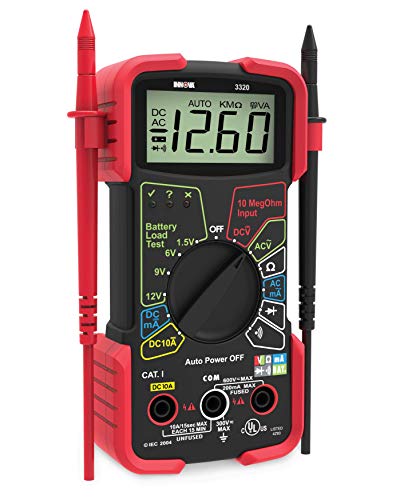
- Auto-ranging simplifies everyday electrical testing
- UL certified with 10 MegOhm input impedance
- Large display with LED charge-status indicators
Best For: Basic automotive and household troubleshooting
Compact RPM Tester
allsun Automotive Multimeter with Tach & Dwell

- Tach and dwell angle testing for ignition work
- Compact body with silicone protection and auto power-off
- Covers voltage, current, resistance, temperature, and frequency
Best For: Portable car diagnostics with RPM and dwell checks
Advanced Current Test Option
FNIRSI TRMS Rechargeable Clamp Meter

- TRMS clamp meter for up to 600A AC/DC current
- Real-time curve recording for intermittent faults
- Rechargeable design with bright 2" TFT display
Best For: Automotive current diagnostics and fault tracking
Engine Diagnostics Starter Pick
Innova 3340 Professional Automotive Digital Multimeter
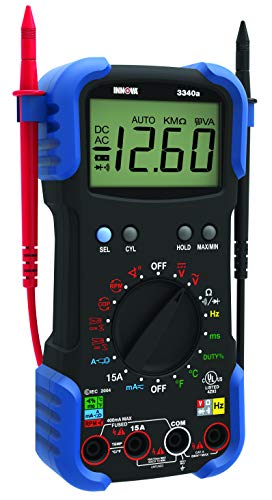
- Includes inductive RPM clamp
- Tests alternator diodes and duty cycle
- Auto-ranging with overload protection
Best For: DIY mechanics needing RPM-capable engine and electrical checks
Feature-Rich Workshop Choice

- RPM, dwell angle, and pulse width support
- USB PC data logging with software
- Autoranging, data hold, and backlit LCD
Best For: Technicians who want ignition testing and live data logging
Pro Shop Upgrade
GEARWRENCH Automotive Pro Digital Multimeter GWDM107
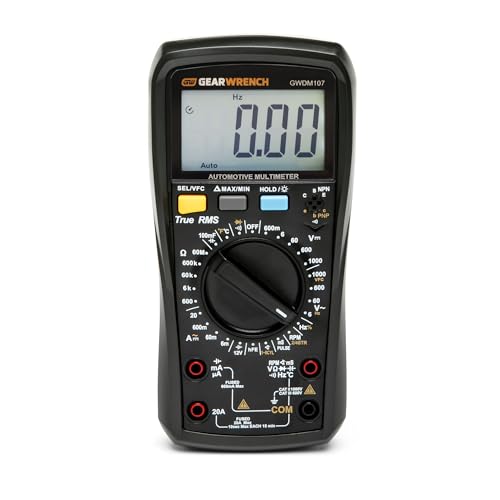
- True RMS with RPM and dwell time
- Large 6000-count backlit display
- Includes case, leads, and thermocouple
Best For: Frequent users wanting a professional-style meter with broad diagnostics
Premium Mid-Range Pick
BTMETER BT-770K Automotive Multimeter with Tachometer
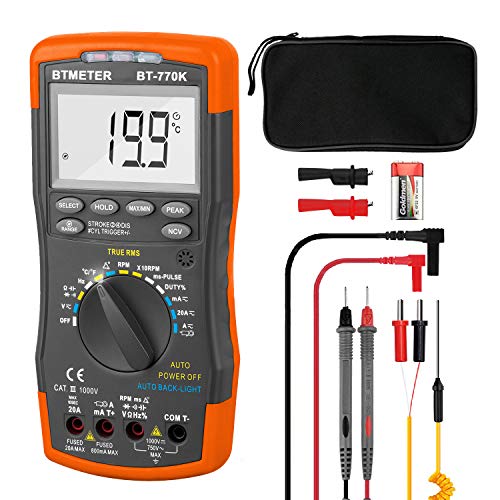
- 600 to 12,000 RPM tachometer and dwell test
- 6,000-count auto-ranging meter with AC True RMS
- Large backlit LCD plus magnetic and kickstand support
Best For: DIYers and mechanics needing broad automotive test coverage
Professional Shop Pick
Fluke 88V Deluxe Automotive Multimeter

- Built for conventional and hybrid vehicle troubleshooting
- Pulse width, duty cycle, and Min/Max/Avg recording
- 10 meg ohm input impedance for computer circuit safety
Best For: Professional technicians and hybrid vehicle diagnostics
Budget Engine-Test Pick
ALLOSUN EM127 Automotive Meter with RPM

- RPM and dwell angle for ignition system testing
- Includes duty cycle, frequency, and temperature measurements
- 1999-count LCD with auto power off
Best For: Budget buyers needing basic engine-test functions
Professional Diagnostic Choice – True RMS RPM Automotive Multimeter
If you want automotive multimeters with RPM measurement that can also handle broader electrical diagnostics, this model stands out for its mix of True RMS accuracy, CAT III 600V safety, and engine-focused test modes. It is built for mechanics and DIY users who need one meter for ignition, sensor, and general circuit troubleshooting.
Best For: Mechanics and advanced DIY users who want a rugged all-in-one meter for RPM, dwell angle, and mixed automotive/industrial testing.
Pros:
- Measures engine RPM on 4-8 cylinder setups and supports dwell angle testing.
- True RMS and CAT III 600V rating add confidence for automotive and industrial work.
- Covers voltage, current, resistance, capacitance, temperature, and frequency in one tool.
- Backlit LCD, data hold, and rugged casing improve usability in dark or rough environments.
Cons:
- More feature-rich than a simple car battery tester, so it may be more than casual users need.
- Its broader function set can take time to learn if you mainly want basic measurements.
This is a strong pick if RPM measurement is only one part of a wider diagnostic workflow. The included accessories and automotive-specific functions make it especially practical for workshop use.
Simple Auto-Ranging Pick – INNOVA 3320 Auto-Ranging Multimeter
For shoppers comparing automotive multimeters with RPM measurement, this INNOVA model is more of a straightforward troubleshooting meter than an advanced engine analyzer. It focuses on safe, auto-ranging electrical testing for common vehicle and household checks, which makes it appealing if you want an easy-to-use meter from a trusted automotive brand.
Best For: Drivers and DIY users who want a simple, auto-ranging multimeter for everyday automotive electrical troubleshooting.
Pros:
- Auto-ranging operation simplifies basic measurements and reduces setup guesswork.
- UL certification and 10 MegOhm input impedance help support safer vehicle use.
- Large display and LED indicators make readings easier to check quickly.
- Works for automotive and household electrical problems, plus batteries and wiring.
Cons:
- No supplied RPM, dwell, or engine timing functions are listed in the notes.
- More limited for ignition-system diagnostics than dedicated automotive testers.
If you mainly need a dependable multimeter for voltage and battery-related checks, this is the easiest option in the group. It is less specialized for RPM work, but that simplicity can be an advantage for basic diagnostics.
Compact RPM Tester – allsun Automotive Multimeter with Tach & Dwell
This allsun meter is a practical option if you want automotive multimeters with RPM measurement in a compact, portable format. It covers core car diagnostics like tach/rotation speed and dwell angle while also adding voltage, current, resistance, temperature, frequency, and continuity testing for general troubleshooting.
Best For: Budget-minded users who want a pocket-sized automotive meter with RPM and dwell functions.
Pros:
- Includes tach (rotation speed) and dwell angle testing for ignition diagnostics.
- Compact design with auto power-off and silicone protective case for portability.
- Handles DC voltage, current, resistance, temperature, frequency, diode, and continuity checks.
- 10A fuse protection and high-voltage protection improve everyday safety.
Cons:
- 3 1/2-digit display is more basic than larger, modern screens.
- Notes suggest it may be harder to read in sunlight.
For straightforward vehicle diagnosis, this meter offers the right core functions without a lot of bulk. It is especially appealing when RPM and dwell are the main automotive features you want.
Advanced Current Test Option – FNIRSI TRMS Rechargeable Clamp Meter
If you are comparing automotive multimeters with RPM measurement, this FNIRSI unit takes a different approach by emphasizing clamp-style current testing, recording, and rechargeable convenience. It is better suited to diagnosing current draw, electrical fluctuations, and battery-related issues than to engine RPM work, but it can still fit well in automotive and home repair toolkits.
Best For: Technicians who want a rechargeable clamp meter for vehicle current diagnostics and intermittent fault tracking.
Pros:
- TRMS clamp meter measures AC/DC current up to 600A.
- Real-time curve recording helps capture intermittent electrical faults.
- 2″ TFT screen with adjustable brightness improves visibility in different lighting.
- Rechargeable Type-C battery reduces downtime from frequent battery swaps.
Cons:
- RPM measurement is not listed in the supplied notes.
- Voltage measurement requires test leads, since the clamp jaws are current-only.
This is the most specialized current-measurement tool in the group, and it is strongest when you need to track current behavior rather than engine speed. For users focused on battery drain or wiring issues, the recording features are a meaningful advantage.
Engine Diagnostics Starter Pick – Innova 3340 Professional Automotive Digital Multimeter
If you want automotive multimeters with RPM measurement for everyday engine troubleshooting, the Innova 3340 is built around practical diagnostic work. It includes an inductive RPM clamp and temperature probe, while also covering core electrical tests like alternators, diodes, duty cycle, solenoids, breaker points, wiring, and switches.
Best For: DIY mechanics and general automotive diagnosis where RPM and temperature readings matter.
Pros:
- Includes an inductive RPM clamp for engine testing.
- Tests alternator diodes, duty cycle, solenoids, breaker points, wiring, and switches.
- Auto-ranging, auto shut-off, and overload protection add convenience.
- 10 MegOhm input impedance helps protect vehicle electronics.
Cons:
- Measures up to 15 amps, which is lower than some higher-output shop tools.
- Less feature-heavy than models with dwell, pulse width, or data logging.
This is a straightforward automotive DMM for users who want RPM capability without overcomplicating the job. Its included clamp and temperature probe make it especially useful for hands-on engine and electrical checks.
Feature-Rich Workshop Choice – allsun EM133A Auto Multimeter
For automotive multimeters with RPM measurement and a long list of diagnostic functions, the allsun EM133A is aimed at workshop-style troubleshooting. It covers RPM, dwell angle, and pulse width for 2-stroke and 4-stroke engines, plus AC/DC voltage, current, resistance, capacitance, frequency, temperature, and duty cycle.
Best For: Technicians and serious DIY users who want ignition-system testing and data logging.
Pros:
- Supports RPM, dwell angle, and pulse width testing for engine ignition systems.
- Measures voltage, current, resistance, capacitance, frequency, duty cycle, and temperature.
- Autoranging, data hold, backlit LCD, and magnetic mount help in the shop.
- USB connectivity with included software allows real-time PC data logging.
Cons:
- Battery-powered design may be less convenient than corded units for some users.
- More advanced than a basic multimeter, so it may be more than casual users need.
The EM133A stands out when you need more than just a quick RPM reading. Its mix of ignition functions, PC logging, and rugged safety features makes it a strong diagnostic tool for detailed automotive work.
Pro Shop Upgrade – GEARWRENCH Automotive Pro Digital Multimeter GWDM107
If you are comparing automotive multimeters with RPM measurement for shop use, the GEARWRENCH GWDM107 is positioned as a full-featured diagnostic meter. It offers True RMS measurement plus RPM, dwell time, pulse width, battery test, temperature, and duty cycle, along with the usual voltage, current, resistance, continuity, diode, capacitance, and frequency checks.
Best For: Users who want a professional-style automotive multimeter with broad test coverage and a large display.
Pros:
- True RMS plus RPM, dwell time, pulse width, and battery test functions.
- Measures AC/DC voltage and current up to 1000V and 20A.
- Large 6000-count backlit display improves visibility in low light.
- Includes carrying case, test leads, thermocouple, and batteries.
Cons:
- Heavier than some compact handheld multimeters.
- May be more tool than needed for simple occasional checks.
The GWDM107 is a strong choice when you want a feature-packed meter that can handle automotive diagnostics in a more professional setting. Its display, safety accessories, and expanded measurement set make it easy to justify for frequent use.
Premium Mid-Range Pick – BTMETER BT-770K Automotive Multimeter with Tachometer
If you want automotive multimeters with RPM measurement that also cover a wide range of electrical checks, the BTMETER BT-770K is built for versatile garage use. It adds tachometer and dwell testing, pulse width, duty cycle, and temperature measurement, while still handling standard voltage, current, resistance, capacitance, and diode/continuity tests.
Best For: DIYers and mechanics who want a feature-packed automotive meter for engine and electrical diagnosis.
Pros:
- Measures 600 to 12,000 RPM plus dwell test for 3/4/5/6/8-cylinder settings
- Auto-ranging with 6,000 counts, AC True RMS, and PEAK Hold on MAX/MIN
- Large 3.0-inch LCD with auto backlight sensor for low-light work
- Includes magnetic attachment, hanger, kickstand, and carry case
Cons:
- BTMETER BT-705A inductive clamp for RPM measurement is not included
- Some users may not need the extra functions beyond RPM and basic electrical testing
The BT-770K stands out if you want a single handheld tool that goes beyond basic meter duties and includes dedicated engine testing features. Its combination of RPM, dwell, pulse width, and automotive-friendly convenience features makes it a practical all-around choice.
Professional Shop Pick – Fluke 88V Deluxe Automotive Multimeter
Among automotive multimeters with RPM measurement-related engine testing, the Fluke 88V is the professional-grade option for conventional and hybrid vehicles. It focuses on troubleshooting features, accuracy, pulse width, duty cycle, and recording functions, with 10 meg ohm input impedance designed not to damage computer circuits.
Best For: Professional technicians and serious diagnosticians working on conventional or hybrid vehicles.
Pros:
- Built for troubleshooting conventional and hybrid vehicles
- Measures pulse width and duty cycle with Min/Max/Avg recording
- 10 meg ohm input impedance helps protect computer circuits
- Large display with bright backlight for visibility
Cons:
- No RPM or dwell details are listed in the supplied notes
- More specialized than a basic general-purpose meter
The Fluke 88V is the strongest pick here when reliability and diagnostic depth matter most. If your priority is a high-end automotive meter for serious vehicle troubleshooting, this model is the most shop-ready of the group.
Budget Engine-Test Pick – ALLOSUN EM127 Automotive Meter with RPM
If you’re shopping for automotive multimeters with RPM measurement on a tighter budget, the ALLOSUN EM127 covers the core engine-test functions without a lot of extra complexity. It works as a digital multimeter and adds RPM, dwell angle, ignition system testing, duty cycle, frequency, and temperature measurement.
Best For: Budget-minded users who want RPM and dwell functions for basic automotive testing.
Pros:
- Measures RPM, dwell angle, duty cycle, frequency, and temperature
- Also includes DC voltage, DC current, resistance, diode, and continuity tests
- 3 1/2-digit LCD with 1999 max reading
- Auto power off helps conserve battery life
Cons:
- Supplied notes say it is suggested for indoor use
- LED display may be difficult to read in sunlight
- Lower display resolution than higher-end models
The EM127 is a straightforward choice if you mainly need ignition-system and engine-speed testing rather than a premium feature set. It gives you the essential automotive measurements in a compact, budget-friendly package.
How We Picked the Best Automotive Multimeters with RPM Measurement
We prioritized accuracy, RPM and dwell support, ease of use, safety ratings, and overall diagnostic usefulness. We also looked for practical features such as auto-ranging, temperature and frequency measurement, pulse width, continuity, and clear displays that make real-world testing faster.
Quick Comparison
Not every meter in this category serves the same user. Some are simple, affordable automotive testers built around RPM and dwell readings, while others add true RMS performance, higher counts, clamp functionality, or rugged protection for more demanding shop use. The best choice depends on whether you mainly diagnose ignition and charging issues, or need a broader electrician-style meter with automotive coverage.
Key Buying Factors for Automotive Multimeters with RPM Measurement
RPM and Dwell Compatibility
Make sure the meter supports the engine types you service, especially 4-, 6-, and 8-cylinder applications. Dwell angle, pulse width, and ignition timing-related functions are useful extras if you regularly tune older systems or diagnose intermittent misfires.
Measurement Range and Accuracy
Look for stable voltage, resistance, frequency, and current readings. True RMS can be valuable if you want more reliable AC measurements, while higher count displays and auto-ranging make readings easier to interpret.
Safety and Build Quality
Check the CAT rating, probe quality, and overall housing durability. If you work around hybrids or higher-energy circuits, stronger safety protection and a well-built enclosure matter more than flashy features.
Usability in the Garage
A backlit display, clear selector layout, and fast response can matter more than specification overload. For many users, the most practical Automotive Multimeters with RPM Measurement are the ones that are quick to set up and easy to read in a dim engine bay.
Who Should Buy Which Automotive Multimeters with RPM Measurement?
DIY owners who mainly need ignition and basic electrical checks should favor straightforward automotive meters with RPM, dwell, and continuity. Weekend mechanics may benefit from auto-ranging models with temperature, capacitance, and frequency support. Professional users should look for stronger safety ratings, better probe quality, and broader diagnostic coverage, especially if they also test charging systems, sensors, and hybrid-related circuits. If you want one tool that can handle both automotive and general electrical work, choose a meter with true RMS and a wider feature set; if your focus is engine diagnostics, prioritize RPM-specific functions and ease of use first.