
Choosing the right scanner can save time, money, and a lot of guesswork when a warning light appears. The best tools for home use balance clear code reading, useful reset functions, and simple operation.
This roundup focuses on practical options for DIY drivers who want confidence diagnosing common problems before heading to a shop.
Best 10 Automotive Diagnostic Scanners for Home Mechanics Picks for 2026
Best for Full-System DIY Diagnostics

- Reads engine, ABS, SRS, and transmission codes
- Offers 12+ reset services for common maintenance
- AutoVIN, live data, and free updates add value
Best For: Home mechanics who want broad diagnostics and service resets in one scanner.
Best for Easy Check-Engine Reads

- Reads and clears stored and pending OBD2 codes
- Clear color display with a beginner-friendly interface
- Includes O2 sensor and EVAP testing for basic diagnostics
Best For: Home mechanics who want a simple OBD2 scanner for check-engine lights and emissions checks.
Best for DIY Service Resets
FOXWELL NT614 Elite OBD2 Scanner

- 5 reset services for common maintenance jobs
- Reads engine, ABS, SRS, and transmission codes
- WiFi updates and AutoVIN simplify use
Best For: DIY mechanics who want affordable code reading plus maintenance reset features.
Best Plug-and-Play Engine Reader

- No battery or app required
- Reads/clears engine codes fast
- Live data, freeze frame, and readiness checks
Best For: Home mechanics who want a simple, screen-based scanner for check-engine and emissions tasks.
Best for Multi-System DIY Diagnostics
AVAPOW AV-D600 4-System Scanner

- Covers engine, transmission, ABS, and SRS diagnostics
- Adds oil reset, EPB reset, and battery match functions
- Auto VIN and lifetime WiFi updates improve ease and longevity
Best For: Home mechanics who want a capable scanner for common repairs and maintenance resets.
Best for Simple Check-Engine Reads

- Reads and clears basic engine/emissions codes fast
- Compact and lightweight for home garage use
- No batteries or charger required
Best For: DIY drivers who want a simple, reliable OBD2 code reader for basic check-engine troubleshooting.
Best for Simple All-System Diagnostics

- Reads engine, ABS, SRS, and transmission codes
- No software download needed; plug-and-scan setup
- Includes live data, AUTOVIN, and lifetime updates
Best For: Home mechanics who want an easy multi-system scanner without advanced reset features.
Best for Basic OBD2 Checks
VDIAGTOOL VD10 OBD2 Code Reader
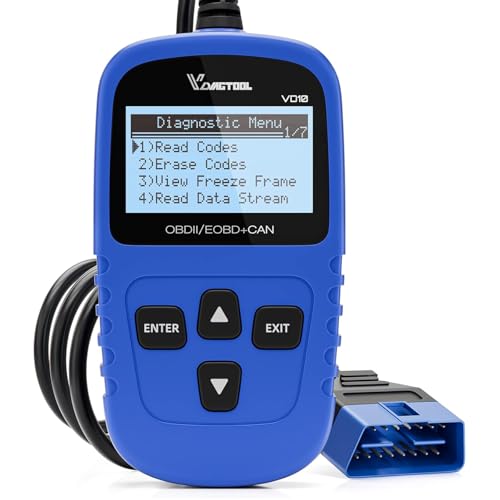
- Reads and clears common OBD2 fault codes
- Includes live data, freeze frame, and I/M readiness
- Easy plug-and-play design for everyday DIY use
Best For: Home mechanics who need a simple scanner for check-engine lights and inspection prep.
Best 2-in-1 Diagnostic Tool
FOXWELL NT301 Plus OBD2 Scanner

- OBD2 code reader plus 12V battery tester
- Live data, DTC lookup, and emissions readiness checks
- No app or subscription needed
Best For: DIYers who want a simple scanner that also checks battery and charging-system health.
Best for Live Data and I/M Readiness
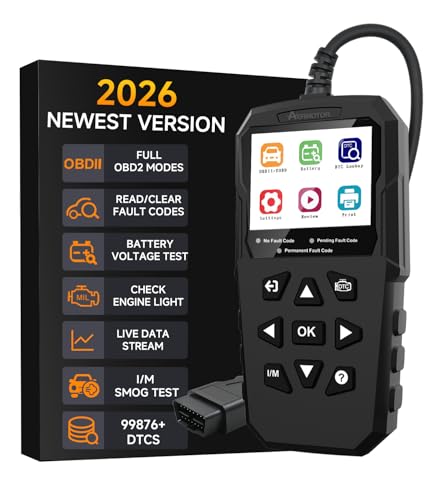
- Built-in DTC library for faster code explanations
- Live data graphing and recording for troubleshooting
- Quick I/M readiness and battery voltage checks
Best For: DIY drivers who want a handheld scanner for codes, smog checks, and live engine data.
Best for Full-System DIY Diagnostics – BLCKTEC 460T OBD2 Scanner
If you want one of the more capable automotive diagnostic scanners for home mechanics, the BLCKTEC 460T stands out for full-system coverage, reset services, and fast code reading. It goes beyond basic engine scans with ABS, SRS, and transmission support, plus a strong set of maintenance functions for common driveway repairs.
Best For: Home mechanics who want pro-style diagnostics, service resets, and live data without jumping straight to a shop-level tablet.
Pros:
- Reads and clears Engine, ABS, SRS, and Transmission codes
- Includes 12+ reset functions like oil, EPB, SAS, TPMS, DPF, and throttle relearn
- AutoVIN, AutoScan, and live data features make troubleshooting faster
- Free lifetime updates and RepairSolutions2 add ongoing value
Cons:
- Not every reset or special function works on every vehicle
- Compatibility checking is important before buying
- More advanced than a basic code reader, so it may be overkill for simple needs
For shoppers comparing automotive diagnostic scanners for home mechanics, the BLCKTEC 460T is a strong middle ground: advanced enough for deeper diagnostics and service work, but still practical for garage use when vehicle compatibility lines up.
Best for Easy Check-Engine Reads – ANCEL AD410 OBD2 Code Reader
If you want one of the most straightforward automotive diagnostic scanners for home mechanics, the ANCEL AD410 is a practical pick for reading and clearing check-engine codes without a steep learning curve. It focuses on core OBD2 functions, adds a clear color screen, and gives you enough live diagnostic detail to handle basic troubleshooting at home.
Best For: Home mechanics who want a simple, no-fuss OBD2 scanner for check-engine light diagnosis, emissions checks, and basic code clearing.
Pros:
- Reads and clears stored, pending, and emissions-related fault codes
- Supports 1996+ OBD2 vehicles with broad protocol compatibility
- Includes O2 sensor and EVAP testing for useful home diagnostics
- Easy-to-read 2.4-inch color display with a beginner-friendly interface
Cons:
- Does not support ABS, SRS, transmission, or other non-engine systems
- Powered by the vehicle connection, so it is not a standalone battery tool
- USB is for updates only, not normal use
For drivers focused on check-engine light troubleshooting, the AD410 covers the essentials without extra complexity. It stands out among automotive diagnostic scanners for home mechanics who mainly need quick code reads, clear guidance, and easy pre-smog readiness checks.
Best for DIY Service Resets – FOXWELL NT614 Elite OBD2 Scanner
If you want one of the more capable automotive diagnostic scanners for home mechanics, the FOXWELL NT614 Elite is a strong value pick because it combines 4-system code reading with several maintenance resets. It’s aimed at DIY owners who want to clear warning lights, check live data, and handle common service jobs without jumping to a shop-level tool.
Best For: Home mechanics who want an affordable scanner for ABS, SRS, transmission, and routine reset functions.
Pros:
- Includes 5 reset services: ABS bleeding, oil, EPB, SAS, and throttle
- Reads and clears codes from engine, ABS, SRS, and transmission systems
- WiFi updates and pre-registration make setup easy
- Live data and AutoVIN add extra diagnostic convenience
Cons:
- Not a full professional bi-directional scan tool
- Reset and coverage features can vary by vehicle
- No power cord or memory card included, so it relies on the OBD port
For home garages, the NT614 Elite lands in a sweet spot: it’s more useful than a basic code reader, but still approachable and budget-friendly for everyday maintenance. Among automotive diagnostic scanners for home mechanics, it stands out most for DIY service tasks rather than advanced pro-level diagnostics.
Best Plug-and-Play Engine Reader – ZMOON ZM201 OBD2 Scanner
If you want one of the simplest automotive diagnostic scanners for home mechanics, the ZMOON ZM201 focuses on fast check-engine troubleshooting without app setup or charging. It plugs directly into the OBD2 port, reads and clears engine codes, shows live data, and gives you a clear on-screen view of what’s happening before you decide on a repair.
Best For: DIY drivers who want a straightforward, screen-based code reader for engine light checks, emissions readiness, and quick fault diagnosis.
Pros:
- Plug-and-play operation with no battery, app, or phone pairing needed
- Reads, clears, and helps interpret engine codes with a large DTC database
- Live data, freeze frame, I/M readiness, O2 sensor, and EVAP checks
- Color display with adjustable brightness and easy-to-use menus
Cons:
- Engine diagnostics only; no ABS, SRS, transmission, or other advanced systems
- Requires a compatible OBD2 vehicle, so very old cars may not work
- Permanent codes cannot be cleared until the underlying issue is fixed
For home mechanics who mainly need a dependable check-engine tool, the ZM201 covers the essentials without overcomplicating the process. It’s a practical pick among automotive diagnostic scanners for home mechanics if you value quick results, simple controls, and basic live engine data over advanced multi-system features.
Best for Multi-System DIY Diagnostics – AVAPOW AV-D600 4-System Scanner
If you want one of the more capable automotive diagnostic scanners for home mechanics, the AVAPOW AV-D600 sits above basic code readers by covering Engine, Transmission, SRS, and ABS faults plus key maintenance resets. It’s a practical pick for DIY troubleshooting, used-car checks, and routine service tasks without paying shop-level diagnostic fees.
Best For: Home mechanics who want a feature-rich scanner for common repairs, reset functions, and broader system coverage.
Pros:
- Diagnoses 4 major systems: engine, transmission, ABS, and airbag
- Includes oil reset, EPB reset, and battery matching for maintenance jobs
- Auto VIN and live data features make it easier for beginners to use
- Lifetime WiFi updates help keep coverage current over time
Cons:
- Not as deep as full professional shop-level scan tools
- Some advanced functions depend on vehicle compatibility
For automotive diagnostic scanners for home mechanics, the AV-D600 is a strong middle-ground option: more capable than a basic OBD2 reader, but still approachable for everyday driveway diagnostics. If you want a scanner that can handle common systems and maintenance resets, this is a smart value play.
Best for Simple Check-Engine Reads – ANCEL AD310 OBD II Scanner
If you want one of the most practical automotive diagnostic scanners for home mechanics, the ANCEL AD310 keeps things simple: plug it in, read the check-engine code, clear it after the fix, and move on. It’s a compact, no-battery code reader built for quick emission-related diagnostics on most 1996+ OBD2 vehicles.
Best For: DIY drivers who mainly need a fast, easy check-engine light reader for basic home garage diagnostics.
Pros:
- Reads and clears common engine/emissions codes quickly
- Compact, lightweight, and easy to store in a glove box or toolbox
- Powered by the vehicle, so there’s no charging or batteries to manage
- Wide OBD2 protocol support for many 1996+ cars, SUVs, and light trucks
Cons:
- Limited to OBD2 emission-related codes; not a full-system scanner
- No advanced repair functions or bi-directional controls
- Compatibility should still be confirmed for your specific vehicle
For home mechanics who mainly need a dependable code reader, the AD310 is a straightforward value pick. It doesn’t try to do everything, but for automotive diagnostic scanners for home mechanics focused on check-engine troubleshooting, that simplicity is often the point.
Best for Simple All-System Diagnostics – FOXWELL NT604 Elite Scanner
If you want one of the more approachable automotive diagnostic scanners for home mechanics, the FOXWELL NT604 Elite is built to help you quickly check common problem areas without a laptop or app setup. It reads and clears codes for engine, ABS, SRS, and transmission systems, making it a practical pick for diagnosing warning lights before you decide on a repair.
Best For: Home mechanics who want a straightforward plug-and-scan tool for checking multiple core systems and reading live data.
Pros:
- Works out of the box with no software download required
- Supports engine, ABS, SRS, and transmission diagnostics in one tool
- Includes live data, DTC lookup, I/M readiness, and AUTOVIN
- Comes with a protective case and free lifetime updates
Cons:
- Does not include service functions like oil reset or brake bleed
- Cannot clear airbag crash data after a collision
- Compatibility can vary by vehicle make, model, and year
Overall, the NT604 Elite is a strong middle-ground option for automotive diagnostic scanners for home mechanics who need broader system coverage than a basic code reader but do not need advanced reset functions. It is best suited to drivers who want reliable fault-code checks, live data, and simple setup at a reasonable price.
Best for Basic OBD2 Checks – VDIAGTOOL VD10 OBD2 Code Reader
If you want a straightforward tool for clearing check-engine lights and checking emissions readiness, the VDIAGTOOL VD10 is a practical pick in automotive diagnostic scanners for home mechanics. It focuses on the core jobs most DIY owners need: reading and clearing codes, viewing freeze-frame data, and confirming whether the car is ready for inspection.
Best For: Home mechanics who want an easy plug-and-play scanner for basic engine diagnostics and smog-check prep.
Pros:
- Reads and clears generic, pending, and manufacturer-specific OBD2 codes
- Shows live data, freeze frame, and I/M readiness on the device
- Built-in code definitions help reduce the need to search online
- Works with most 1996+ OBDII-compliant cars, SUVs, and light trucks
Cons:
- Limited to engine and basic OBD2 functions, not full-system diagnostics
- Small two-line display is functional, but not as easy to read as larger screens
As automotive diagnostic scanners for home mechanics go, this one is a strong value if you mainly need fast fault-code checks without a steep learning curve. It is best suited to owners who want a simple way to diagnose a CEL, verify readiness monitors, and get a clearer starting point before making repairs.
Best 2-in-1 Diagnostic Tool – FOXWELL NT301 Plus OBD2 Scanner
If you want one of the more practical automotive diagnostic scanners for home mechanics, the FOXWELL NT301 Plus stands out for combining basic OBD2 code reading with a 12V battery and charging-system test in one handheld tool. It’s a straightforward pick for checking a check engine light, evaluating battery health before a no-start issue, and confirming emissions readiness without needing an app or subscription.
Best For: DIYers who want a simple, no-subscription scanner that can also test battery and charging system health.
Pros:
- 2-in-1 design handles OBD2 diagnostics and 12V battery testing
- Live data, DTC lookup, and I/M readiness help pinpoint common issues
- No app or subscription required; works on most 1996+ OBDII vehicles
- Clear 2.8-inch color screen is easier to read than smaller basic scanners
Cons:
- Not a full-system or advanced bidirectional scan tool
- Battery testing is limited to 12V lead-acid types
- Compatibility gaps remain for some nonstandard or older vehicles
For home garages, this is a strong value if you want one of the most useful automotive diagnostic scanners for home mechanics without paying for features you may never use. It won’t replace a pro-level scan tool, but it covers the everyday checks most DIY owners need.
Best for Live Data and I/M Readiness – V880 OBD2 Scanner
If you want automotive diagnostic scanners for home mechanics that do more than just read a check-engine code, the V880 stands out with live data graphing, I/M readiness checks, and a built-in DTC library. It’s a practical pick for DIY troubleshooting when you want clear, on-screen info without relying on a phone app.
Best For: Home mechanics who want a feature-rich handheld scanner for code reading, smog checks, and real-time engine data.
Pros:
- Large built-in code library helps explain faults quickly
- Live data graphing and recording make it easier to spot intermittent issues
- One-touch I/M readiness and battery voltage checks add everyday convenience
- No app or battery required, so it’s simple to use out of the box
Cons:
- Best features are focused on engine/OBD2 diagnostics rather than full-system coverage
- The interface is functional, but not as modern as app-based scanners
For automotive diagnostic scanners for home mechanics, this is a strong middle-ground tool: easier than a basic code reader, but still straightforward enough for garage use. If you want live data, emissions checks, and a handheld format, the V880 covers the essentials well.
How We Picked the Best Automotive Diagnostic Scanners for Home Mechanics
We focused on Automotive Diagnostic Scanners for Home Mechanics that offer the best mix of ease of use, core coverage, and value. Priority went to tools that handle check-engine codes clearly, support common maintenance resets, and provide readable live data or system access where it matters most.
We also considered whether a scanner is beginner-friendly, whether it works with a wide range of vehicles, and whether its feature set makes sense for a home garage rather than a professional shop.
Quick Comparison
Basic code readers are best for fast check-engine troubleshooting and emissions prep. Midrange scanners add live data, freeze frame, and I/M readiness, which helps you understand whether a repair actually fixed the issue. More advanced options support multiple systems such as ABS, SRS, transmission, and service resets, which is useful if you maintain several vehicles or handle more than routine engine faults.
Key Buying Factors for Automotive Diagnostic Scanners for Home Mechanics
1. Coverage Beyond Engine Codes
If you only need to read and clear a check-engine light, a basic OBD2 reader is enough. If you want broader fault-finding, look for ABS, SRS, transmission, and service reset support. That extra coverage matters when warning lights are not tied to the engine.
2. Reset Functions
Oil reset, EPB, SAS, TPMS, and battery-related functions can make a scanner much more useful between service visits. Home mechanics should choose resets based on the jobs they actually perform, not just the longest feature list.
3. Live Data and Readability
Live data, graphing, and freeze frame information help confirm intermittent issues and verify repairs. A clear screen, sensible menu structure, and fast code lookup can matter more than raw feature count.
4. Vehicle Compatibility
Make sure the scanner supports your car’s model year, region, and protocols. Most Automotive Diagnostic Scanners for Home Mechanics cover standard OBD2 functions, but advanced features may vary by make and vehicle.
5. Power and Portability
Handheld tools are ideal for garage storage and quick scans. If you want broader testing, consider models that also include battery or electrical system checks for added value.
Who Should Buy Which Automotive Diagnostic Scanners for Home Mechanics?
Buy a basic code reader if you want simple check-engine diagnostics and emissions readiness checks. Choose a midrange scanner if you maintain your own vehicle and want live data plus a few reset functions. Step up to a multi-system tool if you service multiple cars, troubleshoot ABS or airbag lights, or want more dealership-style visibility at home.
For most DIY owners, the best choice is the scanner that matches your most common repair tasks, not the one with the most features on paper.