
If you want safer, more consistent brake inspections, the right measuring tool makes all the difference. The best options help you verify rotor thickness, check wear, and spot problems before they turn into costly repairs.
Below, we focus on practical brake rotor measuring tools that are easy to use, accurate, and suited to real-world DIY and shop work.
Best 10 Brake Rotor Measuring Tools Picks for 2026
Best for Digital Readability
GODESON Disc Brake Rotor Micrometer

- Large LCD makes measurements easy to read
- 0-6in / 0-150mm range with ±0.005in accuracy
- Stainless steel body for durable shop use
Best For: DIY mechanics and garage users who want a clear digital rotor measuring tool.
Best for Wheel-On Checks

- Measures rotors without removing the wheel
- Large digital display with 0.0005" / 0.01 mm resolution
- Includes protective case for storage
Best For: Home mechanics and auto shops needing fast, wheel-on rotor thickness checks.
Best for Dual-Scale Accuracy
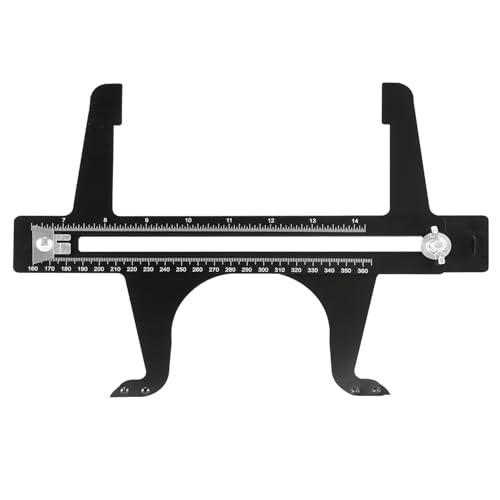
- 6.5 to 14.25 inch measuring range
- Dual metric and imperial scales
- Steel build with locking knob
Best For: DIYers and techs who need one gauge for drum, rotor, and hand brake adjustments.
Best for Rotor & Ball Joint Checks
XUNTOP Digital Disc & Rotor Gauge

- 0.0005" resolution for precise runout measurements
- 13.77" flexible arm with 7" locking plier
- LCD display with zero-setting and mm/in conversion
Best For: Technicians and DIYers needing a versatile gauge for rotor runout and ball joint checks.
Best for Quick Drum Setup
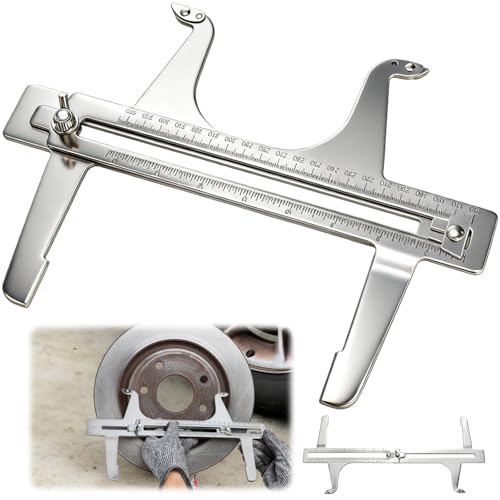
- Dual metric and imperial scales are easy to read.
- Locks measurements for fast transfer to brake shoes.
- Sturdy metal build suits repeated garage use.
Best For: DIY mechanics who need a simple gauge for drum brake setup and adjustment.
Best for Rotor Thickness Checks
6 Inch Digital Brake Disc Caliper

- Inward-curved jaws bypass the rotor wear lip
- ±0.002" accuracy for dependable readings
- Stainless steel body with case and extra battery
Best For: Mechanics and DIY users who need a dedicated caliper for accurate rotor thickness checks.
Best Color-Coded Gauge

- Color-coded green/yellow/red wear ranges
- Metric and SAE markings
- Durable steel build
Best For: Drivers and DIY mechanics who want a quick, easy-read brake wear gauge.
Best for Quick Wheel-On Checks
HARDELL Digital Brake Rotor Caliper
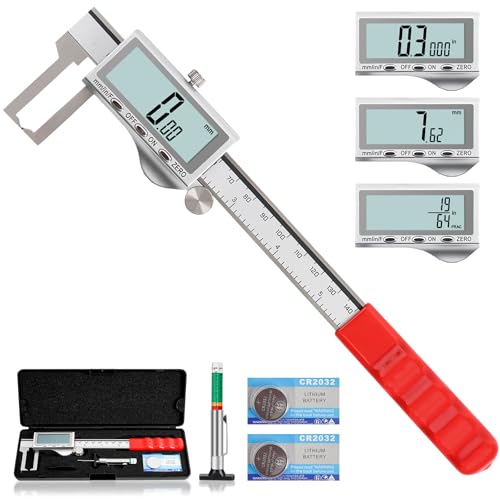
- Measures rotors without removing the wheel
- Large LCD with inch/mm/fraction conversion
- Includes case, sleeve, and tread depth gauge
Best For: Drivers and DIY mechanics who want fast, portable rotor checks.
Best for Worn Rotor Lips

- Slides over raised rotor lips for worn-disc measurements
- ±0.01mm accuracy for confident replacement decisions
- Stainless-steel body with large LCD readout
Best For: DIYers and mechanics who need accurate rotor thickness checks on worn discs without wheel removal.
Best for Wheels-On Checks
Brake Rotor Measuring Tool, Digital Caliper
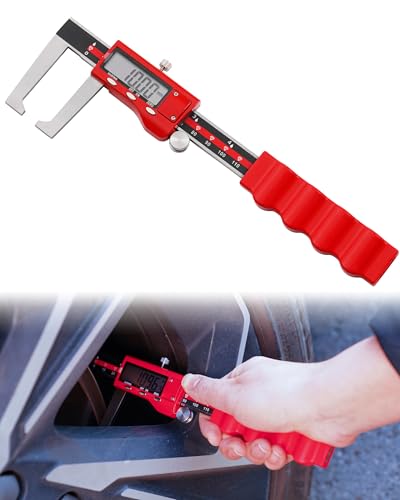
- Measures rotor thickness with the wheel still on
- Large LCD for easier quick readings
- Inch/metric modes for flexible use
Best For: DIY drivers and techs who want a fast, wheels-on rotor thickness gauge.
Best for Digital Readability – GODESON Disc Brake Rotor Micrometer
If you want brake rotor measuring tools that are easy to read and practical for garage use, the GODESON Disc Brake Rotor Micrometer is a solid choice. It combines a 6-inch/150mm measuring range with digital inch/metric conversion, making it straightforward to check rotor thickness accurately before wear becomes a problem.
Best For: DIY mechanics and shop users who want a digital brake rotor gauge with clear readings and simple unit conversion.
Pros:
- Digital LCD display helps reduce reading errors
- Measures both brake rotors and general lengths/depths
- Stainless steel build adds durability and corrosion resistance
- Inch/metric conversion improves versatility across vehicles
Cons:
- More specialized than a basic caliper for everyday tasks
- 6-inch range may be more than some users need
- Digital tools require battery-powered operation
This is a good pick if you want brake rotor measuring tools that prioritize quick reading and practical flexibility over purely manual simplicity. For routine rotor checks, it offers the right mix of accuracy, portability, and workshop-friendly design.
Best for Wheel-On Checks – iGaging Digital Rotor Gauge
For quick, accurate inspections, this iGaging option is one of the more practical brake rotor measuring tools because it lets you measure rotor thickness without removing the wheel. The large digital display, compact 0 to 80 mm range, and included protective case make it easy to keep in a shop drawer or service truck.
Best For: Home mechanics and auto shops that want a wheel-on gauge for fast rotor checks with clear digital readouts.
Pros:
- Measures rotors without removing the wheel
- Large digital display with fine 0.0005″ / 0.01 mm resolution
- Includes a protective case for storage and transport
- Useful for both shop and home garage use
Cons:
- Limited to rotor thickness checks rather than general caliper work
- Not as versatile as a full-feature digital caliper
This is a smart pick if you want brake rotor measuring tools that prioritize speed and convenience over all-purpose measurement features. Its wheel-on design is the main advantage, making routine brake inspections less time-consuming.
Best for Dual-Scale Accuracy – QWORK Brake Measuring Tool
If you want a straightforward gauge for brake rotor measuring tools, the QWORK Brake Measuring Tool offers a practical mix of range, readability, and durability. Its dual metric/imperial scales and locking knob make it a useful choice for checking drum and rotor-related clearances without a lot of setup fuss.
Best For: DIYers and repair techs who need a simple, dual-scale measuring gauge for rear drum brakes, parking brakes, and disc rotors.
Pros:
- Measures 6.5 to 14.25 inches, covering a wide range of brake applications
- Dual-scale layout supports both metric and imperial readings
- Steel construction and locking knob help improve repeatable measurements
- Useful for drum clearance, rotor checks, and hand brake adjustments
Cons:
- More of a gauge for setup and checking than a precision lab tool
- Not as specialized as rotor-only measuring tools
Overall, this is a solid pick if you need brake rotor measuring tools that are easy to read and versatile enough for common brake service jobs. It’s especially appealing for anyone who wants one gauge that can handle multiple brake adjustment tasks.
Best for Rotor & Ball Joint Checks – XUNTOP Digital Disc & Rotor Gauge
If you want one of the more practical brake rotor measuring tools for shop or garage diagnostics, this XUNTOP gauge set combines a high-resolution digital indicator with a flexible arm and locking pliers for stable rotor and ball joint measurements. It’s aimed at quick runout checks, easier positioning, and clearer readings than a basic analog setup.
Best For: Technicians and DIYers who need a versatile gauge for brake rotor runout, ball joint inspection, and general automotive measurement work.
Pros:
- 0.0005" resolution with a 0-1" measuring range for fine diagnostic work
- Flexible 13.77" arm and 7" locking plier help hold position securely on rotors
- LCD readout with zero-setting and mm/in conversion makes measurements easier to track
- Aluminum alloy build is better suited to shop conditions than basic plastic tools
Cons:
- More specialized than a simple brake rotor gauge, so casual users may not need all features
- Setup can take a little time compared with fixed-mount measuring tools
- Best results depend on getting the arm and clamp positioned carefully
This is a strong option if you want brake rotor measuring tools that do more than just one job, especially when you need repeatable runout checks and flexible positioning in tight under-car spaces.
Best for Quick Drum Setup – Tlence Brake Resetting Gauge
If you want a simple, durable gauge for setting drum brake shoes before installation, this Tlence tool is a practical option. It’s especially useful in DIY garages where brake rotor measuring tools and drum-brake setup tools need to be easy to read, fast to adjust, and accurate enough for repeatable results.
Best For: DIY mechanics and home garage users who need a straightforward gauge for drum brake adjustment, parking brakes, and related measuring tasks.
Pros:
- Dual-scale markings make it easy to read in both metric and imperial units.
- Locks in measurements so you can transfer settings directly to the brake shoes.
- Metal construction feels sturdy and suited to regular shop use.
- Covers a wide range of drum sizes, making it versatile for common brake jobs.
Cons:
- More specialized than a general-purpose measuring tool.
- Best suited to drum brake setup, not full rotor inspection kits.
For drivers or hobbyists who mainly need a dependable setup gauge, this model offers strong value and simplicity. It won’t replace dedicated brake rotor measuring tools for every task, but it does make drum brake adjustment faster and less guesswork-heavy.
Best for Rotor Thickness Checks – 6 Inch Digital Brake Disc Caliper
If you need brake rotor measuring tools that can read past the outer wear lip, this 6-inch digital brake disc caliper is built for the job. The inward-curved jaws, ±0.002″ accuracy, and clear digital display make it a practical pick for quick rotor thickness checks in the shop or garage.
Best For: Mechanics and DIY drivers who want a dedicated, easy-to-read caliper for rotor thickness measurement.
Pros:
- Specialized jaws help measure true rotor thickness past the wear ridge
- ±0.002″ precision supports confident replace-or-resurface decisions
- Stainless steel build is suited to oily, busy workshop use
- LCD readout and one-touch unit conversion make it easy to use
Cons:
- Primarily aimed at rotor checks, not a full brake-service kit
- 6-inch size may feel limiting for larger general-purpose jobs
This is a smart, specialized choice if your priority is reliable rotor measurement rather than a multipurpose shop tool. Among brake rotor measuring tools, it stands out for its dedicated jaw design, portability, and straightforward digital readout.
Best Color-Coded Gauge – Brake Lining Thickness Gauge
If you want a simple visual check for wear, this color-coded gauge is a practical pick among brake rotor measuring tools. It uses clear green, yellow, and red ranges to help you quickly judge brake pad thickness in both metric and SAE units, making routine inspections easier at home or in a shop.
Best For: Drivers, DIYers, and technicians who want a straightforward, easy-to-read brake pad and rotor wear gauge for fast safety checks.
Pros:
- Color-coded ranges make wear levels easy to interpret at a glance.
- Supports both metric and SAE measurements for wider compatibility.
- Durable steel construction should hold up well over repeated use.
- Useful for both professional and home garage maintenance.
Cons:
- Focused more on quick thickness checks than precision measuring.
- Best suited to brake pad inspection rather than full rotor machining diagnostics.
For shoppers comparing brake rotor measuring tools, this one stands out for speed and clarity rather than advanced measurement features. It’s a good fit if you mainly want a durable, easy-to-understand gauge for deciding when pads are in the warning or replacement range.
Best for Quick Wheel-On Checks – HARDELL Digital Brake Rotor Caliper
If you want one of the most convenient brake rotor measuring tools for routine inspections, this HARDELL digital caliper is built for fast wheel-on readings. The slim jaw design reaches through spokes, while the large LCD and unit conversion options make it easy to capture and verify measurements without extra fuss.
Best For: Drivers, home mechanics, and DIY users who want a quick, portable way to measure brake rotors, pads, and tread.
Pros:
- Wheel-on design helps measure rotor thickness without removing the wheel
- Large LCD, thumb roller, and locking screw make readings easier to see and fine-tune
- Switches between inches, millimeters, and fractions for flexible use
- Includes a storage case, protective sleeve, and free tread depth gauge
Cons:
- Not as specialized as a dedicated high-end micrometer for pro shop use
- Compact jaws are best suited to rotor checks rather than heavy-duty shop measuring
Overall, this is a practical all-in-one choice if you want brake rotor measuring tools that are simple to carry, quick to read, and versatile enough for everyday vehicle maintenance.
Best for Worn Rotor Lips – Brake Rotor Gauge
If you need one of the most practical brake rotor measuring tools for garage inspections, this digital rotor gauge is built to check disc thickness without removing the wheel. Its specially shaped jaws can slide over worn lips, while the large LCD and inch/metric modes make readings fast and easy to track.
Best For: DIYers and shop users who want a no-fuss way to measure rotor thickness accurately on worn discs.
Pros:
- Fits over raised rotor lips, so you can measure worn discs that standard calipers may miss.
- ±0.01mm precision helps you decide whether a rotor actually needs replacement.
- Hard stainless-steel build is made for long-term shop use.
- Large LCD with mm/inch conversion keeps readings easy to see.
Cons:
- Purpose-built for rotors, so it’s less versatile than a full-size caliper.
- Digital display means you’ll need batteries and occasional screen care.
For buyers focused on rotor checks rather than general measurement, this is one of the more useful brake rotor measuring tools because it solves the common problem of worn lips interfering with a normal caliper. It’s a straightforward, durable option for deciding when pads are enough and when rotor replacement is truly needed.
Best for Wheels-On Checks – Brake Rotor Measuring Tool, Digital Caliper
If you want a simple way to confirm disc thickness without removing the wheel, this option fits the job well. Among brake rotor measuring tools, it stands out for its wheels-on approach, digital readout, and inch/metric switching for quick shop checks.
Best For: DIY drivers and technicians who want an easy wheels-on gauge for fast rotor thickness checks.
Pros:
- Wheels-on design helps you measure rotor thickness without full disassembly
- Large LCD improves readability during quick inspections
- Inch/metric modes add flexibility for different measurement preferences
- Stainless steel build offers a durable feel for regular use
Cons:
- Digital design depends on battery power
- More specialized than a general-purpose caliper
For straightforward thickness checks, this tool covers the essentials without much fuss. If you want brake rotor measuring tools that are easy to read and practical for routine maintenance, this is a solid, task-focused pick.
How We Picked the Best Brake Rotor Measuring Tools
We looked for tools that offer reliable measurement ranges, clear displays or markings, durable construction, and simple operation. Because brake work often happens in tight spaces, we also favored models that are easy to position and read without removing the wheel when possible.
Quick Comparison
Most Brake Rotor Measuring Tools fall into a few useful categories: digital caliper-style gauges for rotor thickness, runout gauges for diagnosing rotor wobble, and combo brake gauges for drum or shoe measurements. Your best choice depends on whether you mainly need routine thickness checks or more advanced diagnostics.
Key Buying Factors for Brake Rotor Measuring Tools
Accuracy and Resolution
For rotor thickness, look for fine resolution and consistent repeatability. A more precise reading helps you decide whether a rotor is still serviceable or near its minimum thickness.
Measurement Range and Fit
Make sure the tool can handle the rotor diameters and access gaps you work with most often. Some designs are better for wheels-on measurement, while others are built for broader brake service tasks.
Display and Readability
Digital screens, large numerals, and dual-scale markings can speed up inspection and reduce reading errors. In a garage setting, easy visibility matters as much as raw precision.
Build Quality
Stainless steel bodies, solid locking mechanisms, and well-finished jaws or probes help tools stay accurate over time. Cheap flex or sloppy alignment can undermine the measurement.
Use Case
If you only need rotor thickness checks, a simple digital caliper-style tool may be enough. If you also inspect drums, pads, or runout, a more specialized brake gauge may be a better value.
Who Should Buy Which Brake Rotor Measuring Tools?
DIY drivers who want quick brake checks should choose a straightforward digital rotor gauge with an easy-to-read display. Weekend mechanics and small shops may prefer a more versatile tool that can handle multiple brake measurements. If you diagnose vibration or pulsation, a runout-capable setup is the smarter choice. For routine maintenance and pad wear checks, a brake lining or combination gauge offers practical coverage without extra complexity.
In short, the best Brake Rotor Measuring Tools are the ones that match your inspection habits, your vehicle types, and the level of precision you actually need.